
0

Understanding Disc Golf Flight Numbers: A Complete Guide
Disc golf flight numbers look like a bunch of random digits, but they actually hold the secret to unlocking your best possible throw. That string of numbers is not just for show. A single change in speed or glide rating can mean the difference between clearing an obstacle and falling short by thirty feet. Most players guess which disc to use and hope for the best, but the real advantage goes to those who can read these numbers like a roadmap. Suddenly, what seems confusing becomes a winning strategy.
Table of Contents
- What Are Disc Golf Flight Numbers And Their Components?
- Why Knowing Flight Numbers Is Important For Players
- How Flight Numbers Influence Disc Performance
- Key Concepts Behind Flight Ratings And Disc Selection
- Real-World Applications Of Disc Golf Flight Numbers
Quick Summary
| Takeaway | Explanation |
|---|---|
| Understand the four flight components | The speed, glide, turn, and fade ratings determine how a disc behaves in flight. |
| Select discs based on playing conditions | Match discs to course layouts, wind conditions, and personal throwing styles for optimal performance. |
| Utilize flight numbers for strategic planning | Use flight ratings to anticipate disc behavior and improve course navigation and shot selection. |
| Align disc features with your skills | Choose discs that complement your arm speed and throwing technique to enhance gameplay. |
| Analyze performance for continuous improvement | Track how different discs respond to your throws to refine techniques and choose better equipment. |
What Are Disc Golf Flight Numbers and Their Components?
Disc golf flight numbers represent a standardized system used to describe how a disc will perform during its flight path. These four-digit codes provide players with crucial information about a disc’s potential trajectory, helping them make informed equipment choices. Learn more about disc performance techniques.
Understanding the Four Flight Number Components
The disc golf flight rating system consists of four key numerical measurements that collectively describe a disc’s aerodynamic characteristics:
- Speed: Indicates the disc’s required throwing velocity, ranging from 1 to 14
- Glide: Measures the disc’s ability to remain airborne, rated from 1 to 7
- Turn: Describes the disc’s initial rightward movement during high-speed flight, rated from 1 to -5
- Fade: Represents the disc’s leftward hook at the end of its flight, rated from 0 to 5
According to the Professional Disc Golf Association, these numbers help players select discs that match their throwing style and skill level. For instance, a disc with a speed rating of 12 requires significant arm strength to achieve its intended flight path, while a lower speed rating might be more suitable for beginners.
The following table summarizes the four core disc golf flight number components and explains their significance for players.
| Component | Rating Range | What It Represents | Impact on Flight |
|---|---|---|---|
| Speed | 1 to 14 | Required throwing velocity | Determines needed arm speed and distance potential |
| Glide | 1 to 7 | Ability to stay airborne | Affects how long/far the disc flies |
| Turn | 1 to -5 | Initial right movement in flight | Influences early trajectory, especially for right-handed backhand throws |
| Fade | 0 to 5 | Left hook at end of flight | Determines how sharply the disc finishes left |
How Flight Numbers Impact Disc Performance
Each component of the flight numbers interacts dynamically to create a disc’s unique flight characteristics. Speed determines the disc’s potential energy and required throwing power. Glide influences how long the disc stays airborne, which can be critical for achieving longer distances. Turn indicates the disc’s initial trajectory, showing whether it will curve right for right-handed backhand throws. Fade predicts how sharply the disc will curve left as it loses momentum.
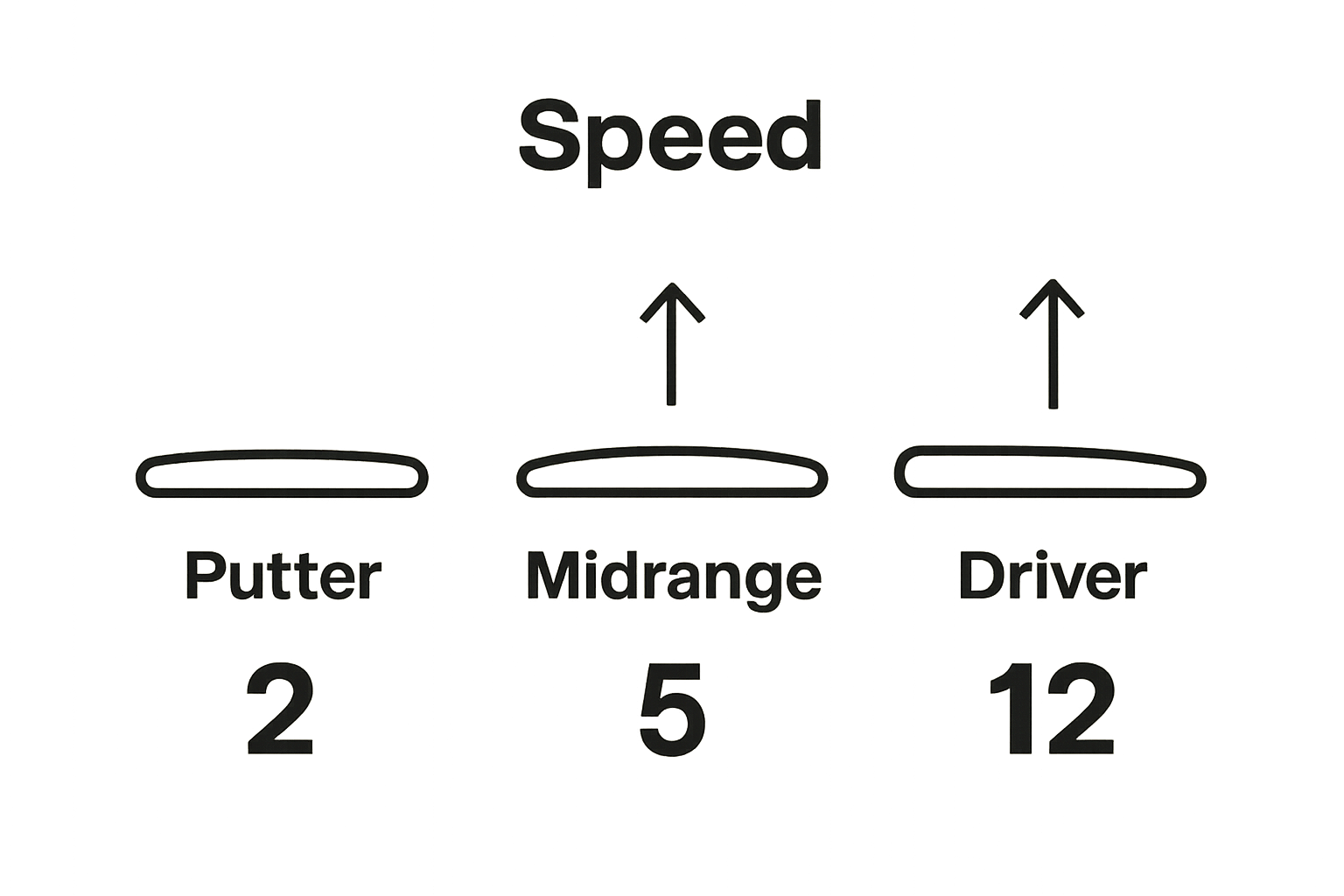
Understanding these numbers allows players to strategically select discs for different scenarios on the course, whether navigating tight fairways, handling windy conditions, or executing specific throwing techniques.
Why Knowing Flight Numbers is Important for Players
Understanding disc golf flight numbers transforms how players approach their game, enabling more strategic disc selection and improved overall performance. Explore advanced disc selection strategies to elevate your gameplay.
Strategic Equipment Selection
Flight numbers serve as a crucial decision-making tool for disc golfers, allowing them to match equipment precisely to specific course challenges and personal throwing techniques. Players can strategically choose discs based on their desired flight characteristics, such as:
- Course Layout: Selecting discs that navigate tight fairways or open spaces
- Wind Conditions: Choosing discs with appropriate turn and fade ratings
- Throwing Style: Matching disc performance to individual skill levels and arm speed
According to Penn State University research, understanding these nuanced flight characteristics directly impacts a player’s ability to predict and control disc trajectory.
Performance Improvement and Skill Development
Knowing flight numbers allows players to develop a more comprehensive understanding of disc behavior. By analyzing how different numerical ratings influence a disc’s movement, players can:
- Predict precise landing zones
- Develop more consistent throwing techniques
- Understand the relationship between disc design and flight performance
This knowledge transforms disc selection from guesswork to a calculated approach, enabling players to make informed decisions that can significantly improve their overall game performance. Whether navigating challenging terrain or competing in tournaments, understanding flight numbers provides a competitive edge by allowing players to select discs that complement their unique throwing style and skill level.
How Flight Numbers Influence Disc Performance
Disc golf flight numbers are not just technical specifications but precise predictors of a disc’s aerodynamic behavior during flight. Discover advanced disc performance techniques to master your throwing strategy.
The Physics Behind Flight Performance
Each flight number represents a specific aerodynamic characteristic that directly impacts how a disc moves through the air. The interaction between these numbers creates complex flight patterns that experienced players learn to anticipate and manipulate. For example:
- Speed Number: Determines the disc’s potential energy and required throwing velocity
- Glide Number: Controls the disc’s ability to maintain altitude and travel distance
- Turn Number: Indicates the initial rightward movement during high-speed flight
- Fade Number: Predicts the disc’s leftward hook as it loses momentum
According to research from Penn State University, understanding these nuanced interactions allows players to predict disc trajectory with remarkable precision.
Practical Applications in Different Playing Conditions
Flight numbers become particularly crucial when navigating varying environmental conditions. Wind, terrain, and throwing technique can dramatically alter a disc’s expected performance. Players who comprehend how these numbers interact can:
- Select discs that compensate for headwinds or tailwinds
- Choose equipment suited to specific course layouts
- Adjust throwing techniques to maximize disc potential
By treating flight numbers as a dynamic system rather than static measurements, skilled disc golfers can transform their understanding of disc behavior, turning technical knowledge into a strategic advantage on the course.
This table compares how flight numbers influence disc selection and strategy in different playing conditions and environments.
| Playing Condition | Strategic Flight Number Focus | Selection Rationale |
|---|---|---|
| Tight Fairways | Minimal turn, low fade | Ensures straight, controlled shots |
| Open Courses | Higher speed, higher glide | Maximizes distance and air time |
| Windy Conditions | Strong fade, stable turn | Maintains reliable trajectory in turbulence |
| Technical Terrain | Moderate speed, controlled turn | Balances distance with maneuverability |
| Beginner Players | Lower speed, high glide | Requires less power, easier distance |
Key Concepts Behind Flight Ratings and Disc Selection
Understanding disc golf flight ratings requires a nuanced approach that combines physics, personal skill, and strategic equipment selection. Learn more about advanced disc performance techniques to elevate your game.
Fundamental Principles of Flight Ratings
Flight ratings are not arbitrary numbers but carefully calculated measurements that describe a disc’s potential aerodynamic behavior. These ratings emerge from complex interactions between disc design, material properties, and throwing mechanics. Players must consider multiple factors when interpreting flight numbers:
- Disc Geometry: Shape influences initial trajectory and stability
- Material Composition: Impacts disc flexibility and wind resistance
- Manufacturing Tolerances: Determines consistency of flight characteristics
According to research from Penn State University, understanding these interconnected elements allows players to make more informed disc selection decisions.
Matching Discs to Player Capabilities
Successful disc selection goes beyond understanding flight numbers. Players must critically evaluate their own throwing capabilities, considering factors such as:
- Arm speed and power
- Throwing technique consistency
- Physical strength and skill level
- Typical playing environments
By aligning disc characteristics with individual player profiles, disc golfers can optimize their equipment choices. This approach transforms flight numbers from abstract measurements into practical tools for improving performance and enjoyment of the game.

Real-World Applications of Disc Golf Flight Numbers
Disc golf flight numbers transcend theoretical measurements, providing practical insights that revolutionize player performance and equipment selection. Explore advanced disc performance strategies to unlock your potential on the course.
Course Management and Strategic Planning
Flight numbers serve as critical tools for navigating complex course layouts and challenging environmental conditions. Players utilize these ratings to make strategic decisions about disc selection, anticipating how different discs will perform under specific circumstances:
- Tight Fairways: Select discs with minimal turn and fade for precise navigation
- Open Courses: Choose discs with higher speed and glide ratings for maximum distance
- Windy Conditions: Use discs with stable flight characteristics to maintain trajectory
According to research from Penn State University, understanding flight numbers allows players to adapt their equipment to diverse playing environments.
Performance Optimization and Skill Development
Competitive disc golfers leverage flight numbers as diagnostic tools for refining throwing techniques and equipment selection. By analyzing how different discs perform under consistent throwing conditions, players can:
- Identify personal throwing strengths and weaknesses
- Select discs that complement individual throwing styles
- Track skill progression through equipment performance
This data-driven approach transforms flight numbers from simple specifications into sophisticated performance optimization tools, enabling players to make informed decisions about their equipment and technique.
Ready to Unleash the Power of Disc Golf Knowledge?
You have just discovered how complicated disc golf flight numbers can be. Have you ever felt uncertain about picking the right disc for your throwing style or gotten frustrated by unpredictable throws? This guide explained the importance of speed, glide, turn, and fade ratings, and how understanding these numbers can transform guesswork into confident, strategic play. Now it is time to turn that knowledge into real results on the course.

Make your next game your best one yet. Shop smarter and choose with confidence using our wide selection at golfdiscs.com, where every disc is detailed with the flight numbers you need. Looking for advanced performance insights? Visit our expert breakdown of disc flight performance and elevate your disc selection today. The right disc can change your game—find yours now before someone else gets it!
Frequently Asked Questions
What do disc golf flight numbers mean?
Disc golf flight numbers are a standardized system that describes a disc’s performance in flight. They consist of four components: speed, glide, turn, and fade, which together provide insight into how a disc will behave during play.
How does the speed rating impact disc performance?
The speed rating indicates the throwing velocity required for a disc to achieve its intended flight path. Discs with higher speed ratings (up to 14) require more arm strength, while lower speed ratings are generally better suited for beginners.
What is the significance of the glide number?
The glide number measures a disc’s ability to maintain altitude during flight, with ratings ranging from 1 to 7. A higher glide rating means the disc will stay airborne longer, which is crucial for achieving greater distances.
How do turn and fade ratings affect a disc’s flight path?
Turn represents the disc’s initial rightward movement during high-speed flight, with ratings from 1 (little turn) to -5 (significant turn for right-handed backhand throws). Fade indicates how sharply the disc will curve left at the end of its flight, with ratings from 0 to 5. Understanding these ratings helps players predict and control the disc’s trajectory.