
0

The Definitive Discraft Flight Path Guide
Did you know that over 90 percent of disc golfers rely on flight numbers when choosing a disc? Understanding these numbers can make the difference between a perfect shot and a frustrating round. Whether you are new or aiming to refine your skills, knowing how Discraft’s flight path ratings work helps you pick the right disc every time, tackle tough fairways, and unlock more advanced throwing techniques.
Table of Contents
- What Discraft Flight Path Means
- How Speed, Glide, Turn, Fade Work
- Understanding Discraft Stability Rating
- Why Discraft Uses Five Numbers
- Using Flight Path For Shot Planning
Key Takeaways
| Point | Details |
|---|---|
| Understanding Flight Path | A disc’s flight path is influenced by its design and stability ratings, which are crucial for performance in disc golf. |
| Stability Ratings | Discraft’s stability ratings (from -3 to +3) categorize discs as understable, stable, or overstable, helping players select the right disc for their throwing style. |
| Key Flight Characteristics | The four main characteristics—speed, glide, turn, and fade—determine a disc’s performance, guiding players in disc selection and shot planning. |
| Five-Number System | Discraft’s unique five-number rating system includes stability as a fifth number, providing deeper insights into disc flight behavior and enhancing player decision-making. |
What Discraft Flight Path Means
Understanding a disc’s flight path is crucial for mastering disc golf performance. Discraft defines flight path as the specific trajectory a disc follows during its entire journey through the air, which is fundamentally influenced by its unique design and stability characteristics.
A disc’s flight path isn’t random – it’s a precise mathematical prediction of how the disc will travel based on several key factors. According to Discraft’s official documentation, stability ratings are the primary mechanism for describing these flight behaviors. These ratings provide disc golfers with a standardized way to understand how a disc will perform when thrown.
The stability rating system breaks down into three primary categories:
- Zero Stability (0): Indicates a straight flight path
- Negative Stability (Understable): The disc turns right for right-handed backhand throwers
- Positive Stability (Overstable): The disc turns left for right-handed backhand throwers
These nuanced flight characteristics allow players to select discs that match their throwing style, skill level, and specific course challenges. By understanding flight path dynamics, disc golfers can make more strategic disc selections and improve their overall game performance. For a deeper exploration of how these flight numbers work, check out our guide on understanding disc golf flight numbers.
How Speed, Glide, Turn, Fade Work
Understanding the four key flight characteristics of a disc is essential for disc golfers looking to improve their game. According to PDGA, these flight numbers provide critical insights into how a disc will perform during its journey through the air.
Speed is the first and most fundamental characteristic. This number indicates how fast a disc must be thrown to achieve its intended flight path. Higher speed numbers require more arm power and skill – beginner players typically start with lower speed discs that are more forgiving and easier to control. Innova Discs confirms that speed directly relates to the disc’s required throw velocity.
The next three characteristics work together to create a disc’s unique flight profile:
- Glide: Measures the disc’s ability to stay airborne
- Turn: Describes the disc’s initial rightward curve for right-handed backhand throws
- Fade: Indicates the disc’s leftward movement as it slows down
These nuanced flight numbers allow players to select discs that match their throwing style and skill level. Experienced players often carry multiple discs with different flight characteristics to handle various course challenges. For more detailed insights into mastering disc flight dynamics, explore our disc flight tips.
Understanding Discraft Stability Rating
The stability rating is a crucial concept in disc golf that helps players understand how a disc will behave during flight. According to Discraft, their innovative rating system provides a precise way to predict a disc’s trajectory, ranging from -3 to +3.
In this comprehensive rating system, each number tells a specific story about the disc’s flight characteristics. UDisc explains the nuanced breakdown:
- 0 Stability: The disc flies perfectly straight
- Negative Ratings (-1 to -3): Understable discs that turn right during initial flight
- Positive Ratings (+1 to +3): Overstable discs that curve left as they slow down
These stability ratings are particularly important for right-handed backhand throwers, as they directly indicate how the disc will move through the air. Beginners often start with discs closer to zero stability, while advanced players use more extreme ratings to execute specialized throws. Players looking to dive deeper into understanding disc dynamics can explore our guide on disc golf disc stability for more comprehensive insights.
Why Discraft Uses Five Numbers
Discraft’s unique approach to disc ratings sets it apart in the disc golf world. UDisc reveals that the fifth number represents a critical piece of flight information – the disc’s stability rating – which provides players with a more comprehensive understanding of how the disc will behave in flight.
Traditional disc golf rating systems typically use four numbers, but Discraft recognized the need for more precise information. Discraft aims to simplify disc selection by offering a clear, additional metric that helps players make more informed choices about their disc performance.
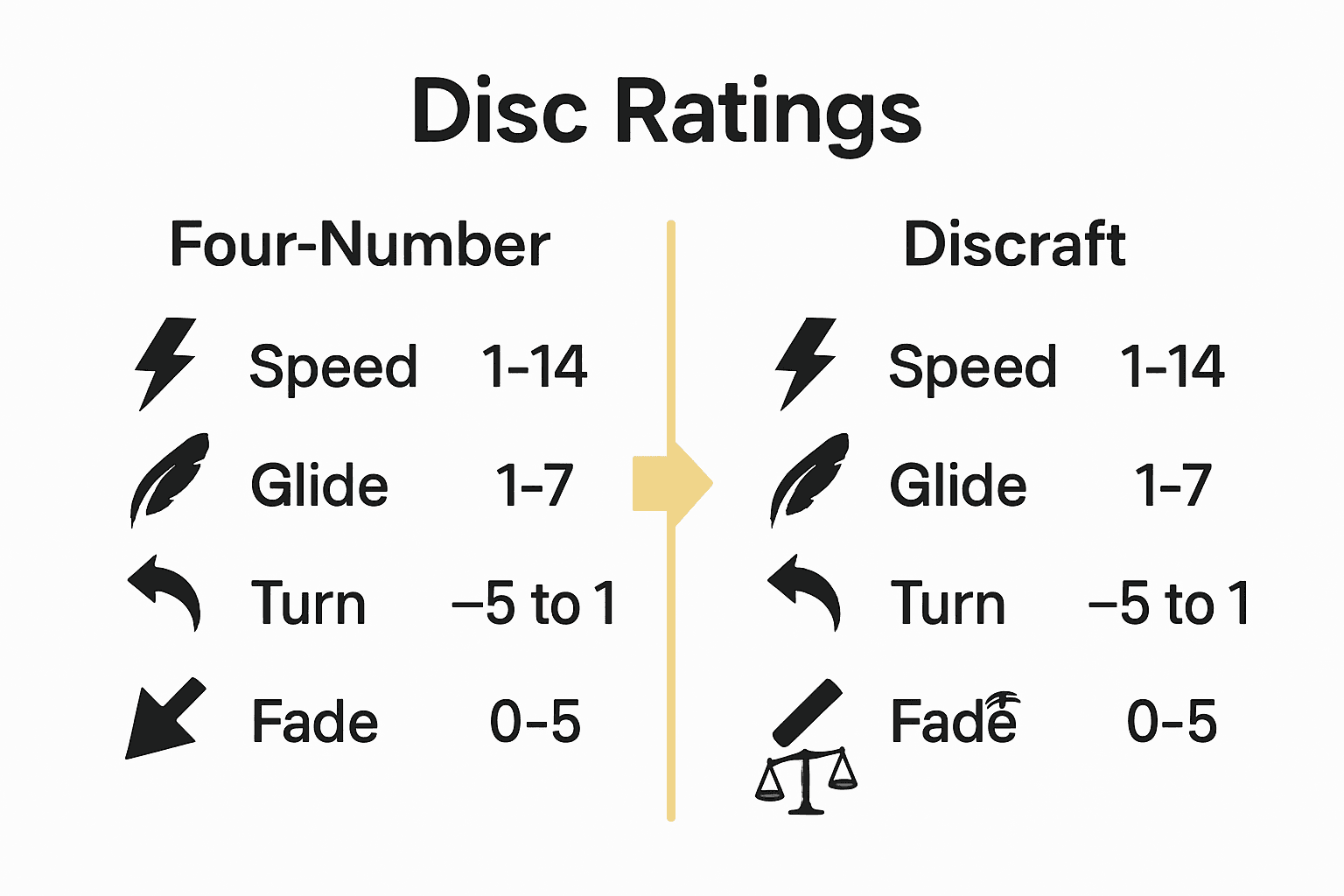
The five-number system breaks down as follows:
Here’s a comparison of the five-number disc golf flight rating system:
| Number Position | Characteristic | What It Measures | Typical Range |
|---|---|---|---|
| 1 | Speed | Throw velocity requirement | 1 to 14 |
| 2 | Glide | Disc’s ability to stay airborne | 1 to 7 |
| 3 | Turn | Initial rightward turn (RHBH) | +1 to -5 |
| 4 | Fade | Leftward finish as disc slows | 0 to 5 |
| 5 | Stability Rating | Overall flight tendency | -3 to +3 |
- First four numbers: Traditional flight characteristics (speed, glide, turn, fade)
- Fifth number: Stability rating ranging from -3 to +3
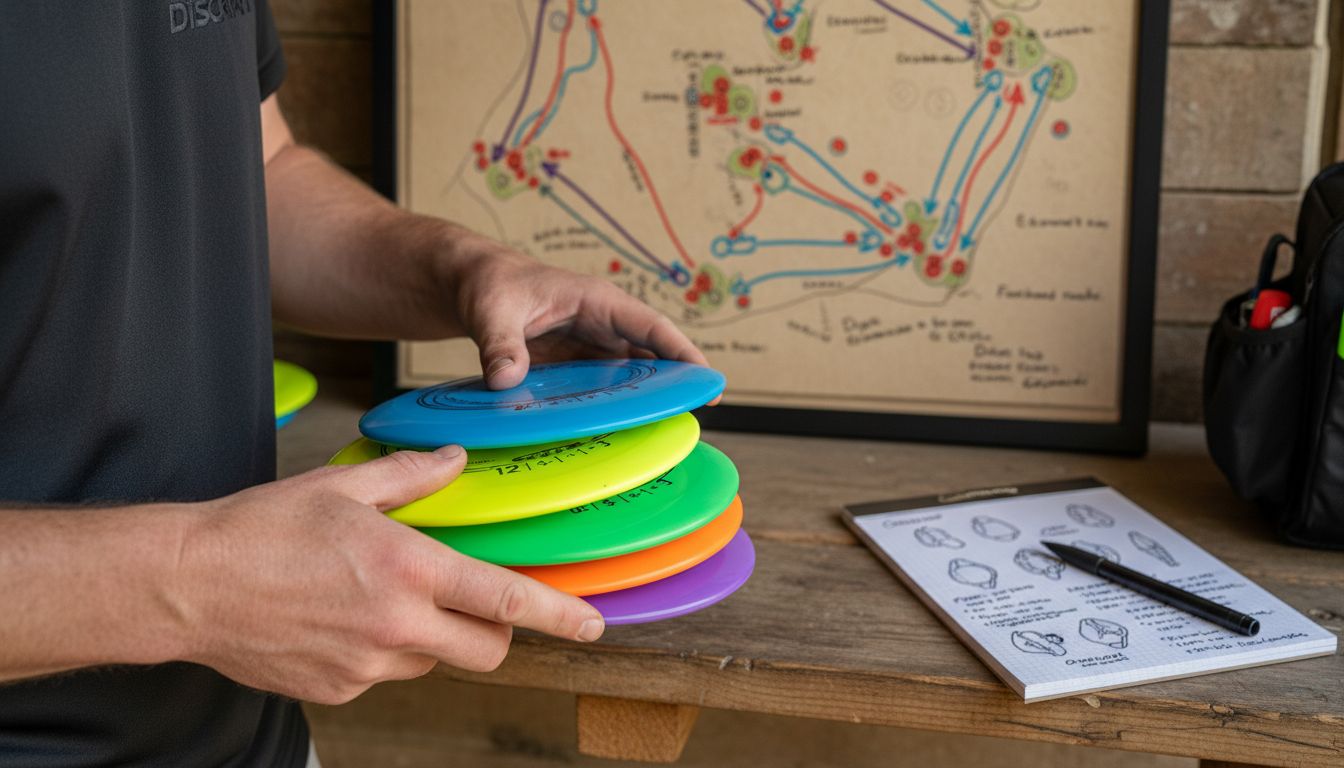
This extra number is a game-changer for players at all levels. By providing more detailed flight information, Discraft empowers disc golfers to select discs that match their throwing style and skill level precisely. For players looking to decode disc golf terminology in more depth, our disc golf terms guide offers additional insights into the language of the sport.
Using Flight Path For Shot Planning
Mastering shot planning in disc golf requires a deep understanding of how different discs behave during flight. Discraft emphasizes that selecting the right disc for each shot is fundamentally about understanding its stability and potential trajectory.
According to the Professional Disc Golf Association, analyzing a disc’s flight numbers allows players to predict and strategically plan their shots with remarkable precision. This strategic approach involves considering multiple factors:
- Stability Rating: Determines the disc’s natural turning tendency
- Speed: Indicates the power required to achieve optimal flight
- Glide: Helps predict the disc’s potential distance
- Turn and Fade: Reveal the disc’s expected path through the air
Skilled players develop a nuanced approach to shot planning, matching disc characteristics to specific course challenges. Beginners might start with more stable discs that fly predictably, while advanced players use intricate combinations of disc properties to navigate complex course layouts. For players looking to expand their strategic understanding, our understanding disc golf disc stability guide offers additional insights into making strategic disc selections.
Elevate Your Game by Mastering Discraft Flight Paths
Struggling to find the perfect disc that matches your throwing style and course challenges? The complexity of flight numbers and stability ratings can make choosing the right disc overwhelming. Understanding key concepts like speed, glide, turn, fade, and especially the unique stability rating is essential to gain confidence and precision in every throw.

Ready to transform frustration into consistency on the course Discover discs tailored to your exact flight needs at GolfDiscs.com. Dive deeper into disc performance with our expert resources such as the guide on understanding disc golf flight numbers and the comprehensive disc golf disc stability guide. Start making smarter disc choices today by visiting GolfDiscs.com and unlock your full potential with equipment built for your game.
Frequently Asked Questions
What is the flight path of a disc in disc golf?
The flight path of a disc refers to the specific trajectory it follows during its flight, influenced by its design and stability characteristics.
How do the speed, glide, turn, and fade numbers affect disc performance?
These four characteristics provide insights into how a disc will behave in flight: speed indicates the required throw velocity, glide measures its ability to stay in the air, turn describes the initial curve for right-handed backhand throws, and fade indicates the leftward movement as the disc slows down.
What does a stability rating in disc golf tell players?
The stability rating indicates a disc’s expected flight behavior, with negative values (understable) turning right, positive values (overstable) turning left, and zero indicating a straight flight path.
Why does Discraft use a five-number rating system for its discs?
Discraft’s five-number rating system includes a stability rating as the fifth number, providing additional information about a disc’s performance, which helps players make more informed disc selections.