
0
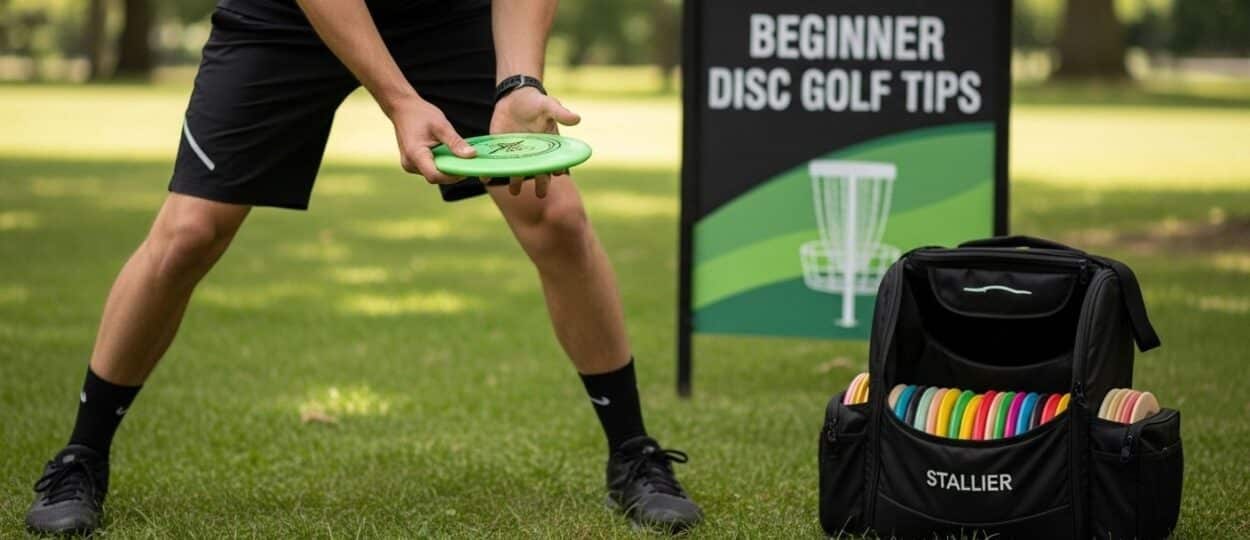
6 Essential Beginner Disc Golf Tips for 2025 Success
Disc golf is exploding in popularity and thousands of new players are hitting the courses every month. Turns out, making the right choices early on matters way more than most beginners realize. Beginners who start with the right gear and routines have a much higher success rate—over 70 percent build strong skills within their first season compared to those who don’t. What surprises most people is that mastering disc golf is far less about raw athletic ability and way more about smart habits, muscle memory, and the right disc in your hand from day one.
Table of Contents
- Step 1: Choose The Right Discs For Your Skill Level
- Step 2: Master Your Grip And Stance For Better Throws
- Step 3: Practice Your Driving Techniques On The Course
- Step 4: Focus On Putting Fundamentals For Accurate Shots
- Step 5: Develop A Consistent Pre-Shot Routine
- Step 6: Track Your Progress And Adjust Your Strategy
Quick Summary
| Key Point | Explanation |
|---|---|
| 1. Select beginner-friendly discs | Focus on a putter, mid-range disc, and fairway driver to develop throwing skills conveniently. |
| 2. Master grip and stance techniques | Use the power grip and maintain a stable stance for better control and accuracy in your throws. |
| 3. Practice driving techniques consistently | Engage in backhand, forehand, and overhead throws to build muscle memory and improve your throwing performance. |
| 4. Develop a reliable pre-shot routine | Establish a consistent sequence before each throw to manage anxiety and enhance focus during your game. |
| 5. Track performance metrics regularly | Log distances, accuracy, and scores to identify strengths and areas for improvement in your disc golf game. |
Step 1: Choose the Right Discs for Your Skill Level
Starting your disc golf journey requires understanding the fundamental equipment that will shape your early experiences. Selecting the right discs is crucial for building confidence and developing proper throwing techniques. While experienced players might carry a complex arsenal of specialized discs, beginners need a strategic and simplified approach.
For new players, focus on acquiring three primary disc types: a putter, a mid-range disc, and a fairway driver. According to research from Pennsylvania State University’s disc golf blog, fairway drivers offer excellent control and help newcomers develop consistent throwing mechanics before progressing to more challenging distance drivers.
To help you select the right discs as a beginner, here’s a summary table of recommended disc types, their key characteristics, and why they’re important for early skill development.
| Disc Type | Key Characteristics | Why It Matters for Beginners |
|---|---|---|
| Putter | Slow speed, straight flight, good control | Easiest to throw straight; crucial for learning proper release |
| Mid-Range Disc | Medium speed, moderate stability | Offers controlled distance; helps develop consistent technique |
| Fairway Driver | Low speed rating (3-6), stable flight | Enhances distance and control; prepares you for advanced throws |
| Baseline Plastic | Grippy, affordable, forgiving | Improves grip and feels comfortable for learning fundamentals |
| Starter Pack | Usually includes putter, mid, driver | Cost-effective; ensures you have balanced flight options |
When choosing discs, prioritize stability and forgiveness. Look for discs with lower speed ratings (between 3-6) that naturally want to fly straight and resist turning dramatically. Plastics matter too – start with more affordable, durable options like baseline or standard grade plastics which provide better grip and are more forgiving of imperfect throwing techniques.
Consider purchasing a starter pack that includes complementary discs designed for beginners. These collections typically balance different flight characteristics and help you understand how various disc designs perform. Check out our guide on selecting beginner discs to explore recommended options that match your initial skill level.
As you progress, pay attention to how each disc performs during practice. A successful disc selection means you can consistently throw straight lines, maintain predictable flight paths, and gradually build muscle memory. The goal isn’t acquiring the most expensive equipment, but finding discs that feel comfortable and help you develop fundamental skills.
Step 2: Master Your Grip and Stance for Better Throws
Successful disc golf throws depend on two critical fundamentals: your grip and your stance. These foundational elements determine the power, accuracy, and consistency of every throw you make. Understanding and practicing proper techniques will dramatically improve your disc control and overall performance.
Begin with the power grip, a technique where your fingers wrap tightly around the disc’s rim. Position your thumb on top of the disc and curl your index and middle fingers underneath the rim, creating a secure connection. According to research from AIP Advances, thumb placement approximately 3 cm from the disc’s edge maximizes launch speed and spin rate.
Your stance should provide a stable, balanced platform for generating throwing power. Start with your feet shoulder-width apart, with your dominant side slightly back. Weight distribution is crucial – keep about 60% of your weight on your back foot during the initial throwing motion, then smoothly transfer forward as you release the disc. This dynamic movement helps generate momentum and ensures a more powerful, controlled throw.
Practice these techniques in front of a mirror or record yourself to analyze your form. Look for consistent hand placement, smooth weight transfer, and a balanced follow-through. Learn more about advanced throwing techniques to refine your skills beyond basic mechanics.
Remember that muscle memory develops through repetition. Spend time practicing your grip and stance without worrying about distance or accuracy initially. Focus on developing a comfortable, repeatable motion that feels natural. As you become more confident, you’ll notice improved throw consistency and greater disc control.
Step 3: Practice Your Driving Techniques on the Course
Driving is the cornerstone of disc golf performance, transforming your game from tentative throws to confident launches. Developing consistent driving techniques requires deliberate practice and a strategic approach to understanding disc flight characteristics and your personal throwing mechanics.
Start by selecting an open practice area where you can throw without obstacles or risk of losing discs. Begin with shorter distances and focus on smooth, controlled movements rather than maximum power. Your goal is developing muscle memory and understanding how different discs respond to various throwing angles and release points. Explore our comprehensive guide to disc golf basics to supplement your practice techniques.
Practice three fundamental driving techniques: backhand, forehand, and overhead throws. For backhand throws, stand perpendicular to your target, keeping your weight balanced and rotating your torso to generate power. Your arm should move like a pendulum, creating a smooth arc from behind your body to a full follow-through. Forehand throws require a different grip and body positioning, with your chest facing slightly sideways and your throwing arm moving more like a sidearm baseball pitch.
Below is a comparison table outlining the three main driving techniques in disc golf, including recommended stance, grip, and situations for use, to help you practice each method effectively.
| Technique | Stance Description | Grip Type | Best Used For |
|---|---|---|---|
| Backhand | Perpendicular to target, balanced weight | Power Grip | Maximum distance, general driving |
| Forehand | Chest sideways to target, stable base | Modified Power | Sidearm throws, tricky angles |
| Overhead (Tomahawk/Thumber) | Upright, slight bend in knees | Firm Overhand | Navigating obstacles, over trees |
According to research examining disc launch mechanics, thumb placement around 3 cm from the disc’s edge can optimize spin rates and launch speeds. This technical insight suggests paying close attention to your grip’s nuanced details can significantly improve throw consistency.
Track your progress by measuring throw distances, noting disc flight patterns, and recording video of your technique. Successful driving practice means developing muscle memory where throws feel natural, discs consistently follow intended flight paths, and you can confidently adjust your technique based on course conditions and disc selection.
Step 4: Focus on Putting Fundamentals for Accurate Shots
In disc golf, putting represents the most critical skill for scoring and consistency. While driving generates distance, putting determines whether you successfully complete each hole. Mastering putting techniques transforms your game from occasional success to reliable performance.
Begin by establishing a stable, comfortable stance that provides balanced weight distribution. Position your feet shoulder-width apart, with your dominant side slightly forward. Your body should face the basket, creating a direct line between your shoulders, throwing arm, and target. Develop a consistent pre-throw routine that helps calm nerves and standardize your approach. This might involve taking a deep breath, visualizing the disc’s path, or performing a small physical ritual that centers your focus.
According to research from Georgia Southern University’s Campus Recreation program, successful putting involves three key mechanics: grip, release angle, and follow-through. Use a power grip or fan grip that feels most natural, keeping your wrist locked and arm motion smooth. Release the disc flat and level, minimizing unnecessary rotation that could send your putt off course. Check out our comprehensive guide to improving your disc golf technique for additional insights into refined putting strategies.
Practice is paramount. Set up targets at various distances and create structured putting drills that challenge your accuracy. Start close to the basket and gradually increase distance as your technique improves. A good benchmark is maintaining a consistent putting success rate of 80% within 20 feet before expanding your range. Track your progress by recording made versus missed putts, identifying patterns in your technique, and adjusting your approach accordingly.
Remember that mental composure plays as significant a role as physical technique. Stay relaxed, maintain a positive mindset, and view each putt as an opportunity to improve. Successful putting means developing muscle memory, confidence, and a repeatable motion that feels natural under various course conditions.
Step 5: Develop a Consistent Pre-Shot Routine
A pre-shot routine transforms your disc golf performance from random attempts to calculated, confident throws. Professional athletes across sports understand that consistent preparation directly correlates with improved execution, and disc golf is no exception. Your routine becomes a mental anchor, helping you manage performance anxiety and create muscle memory for reliable shots.
Begin by establishing a three-step mental and physical preparation sequence. First, assess the course conditions – wind direction, potential obstacles, and target distance. Take a moment to visualize your desired disc trajectory, mentally mapping the most effective throwing path. Next, select the appropriate disc from your bag, considering wind, distance, and required flight characteristics. Learn more about strategic disc selection techniques to enhance your decision-making process.
According to psychological research in performance preparation, consistent pre-performance routines activate specific motor recall schemes, improving movement accuracy. Develop a physical preparation ritual that signals to your body it’s time to execute. This might involve taking two deep breaths, performing a specific grip adjustment, or moving your feet into a standard stance. The key is creating a repeatable sequence that feels natural and helps center your focus.
Practice your routine extensively during training sessions, not just during competitive play. Start by implementing the routine during driving and putting practice, ensuring each throw follows the same mental and physical preparation steps. Video record yourself to identify and refine subtle nuances in your approach. A successful pre-shot routine means you can confidently execute throws under various conditions, maintaining composure whether you’re practicing alone or competing in a tournament.
Remember that developing a consistent routine takes time and patience. Your goal is creating a personalized sequence that feels comfortable, reduces performance anxiety, and helps you approach each throw with calculated confidence. Embrace the process of refinement, knowing that every deliberate practice brings you closer to mastering your disc golf technique.
Step 6: Track Your Progress and Adjust Your Strategy
Continuous improvement in disc golf demands systematic progress tracking and strategic adaptation. Unlike casual weekend sports, disc golf rewards players who approach their development with intentional analysis and data-driven adjustments. Your ability to understand your performance metrics will accelerate your skill progression more rapidly than random practice.
Start by establishing baseline measurements for key performance indicators. Create a digital or physical logbook that tracks your throwing distances, putting accuracy, course scores, and disc selection effectiveness. Modern smartphone apps and digital scorecards make this process seamless, allowing you to record details immediately after each round. Explore our comprehensive guide to tracking disc golf performance for additional tracking strategies.
According to research on skill acquisition in sports, consistent feedback and performance assessment are crucial for athletic development. Break down your tracking into specific categories: driving accuracy, putting percentage, course management, and mental performance. Assign numerical scores or percentages to each category, enabling you to visualize your strengths and identify areas requiring focused improvement.
Implement a quarterly review process where you analyze your performance data. Look for patterns in your throwing techniques, disc selection, and course strategy. Are certain discs consistently underperforming? Do you struggle with specific types of throws or course terrains? Use these insights to adjust your equipment, practice routines, and overall approach. A successful tracking strategy means you can objectively measure your progress, understand your skill evolution, and make informed decisions about your disc golf development.
Remember that tracking is not about perfection but progressive improvement. Embrace each data point as valuable feedback, maintaining a growth mindset that views challenges as opportunities for learning. Your disc golf journey is a continuous process of refinement, with each recorded statistic bringing you closer to mastering this dynamic and rewarding sport.
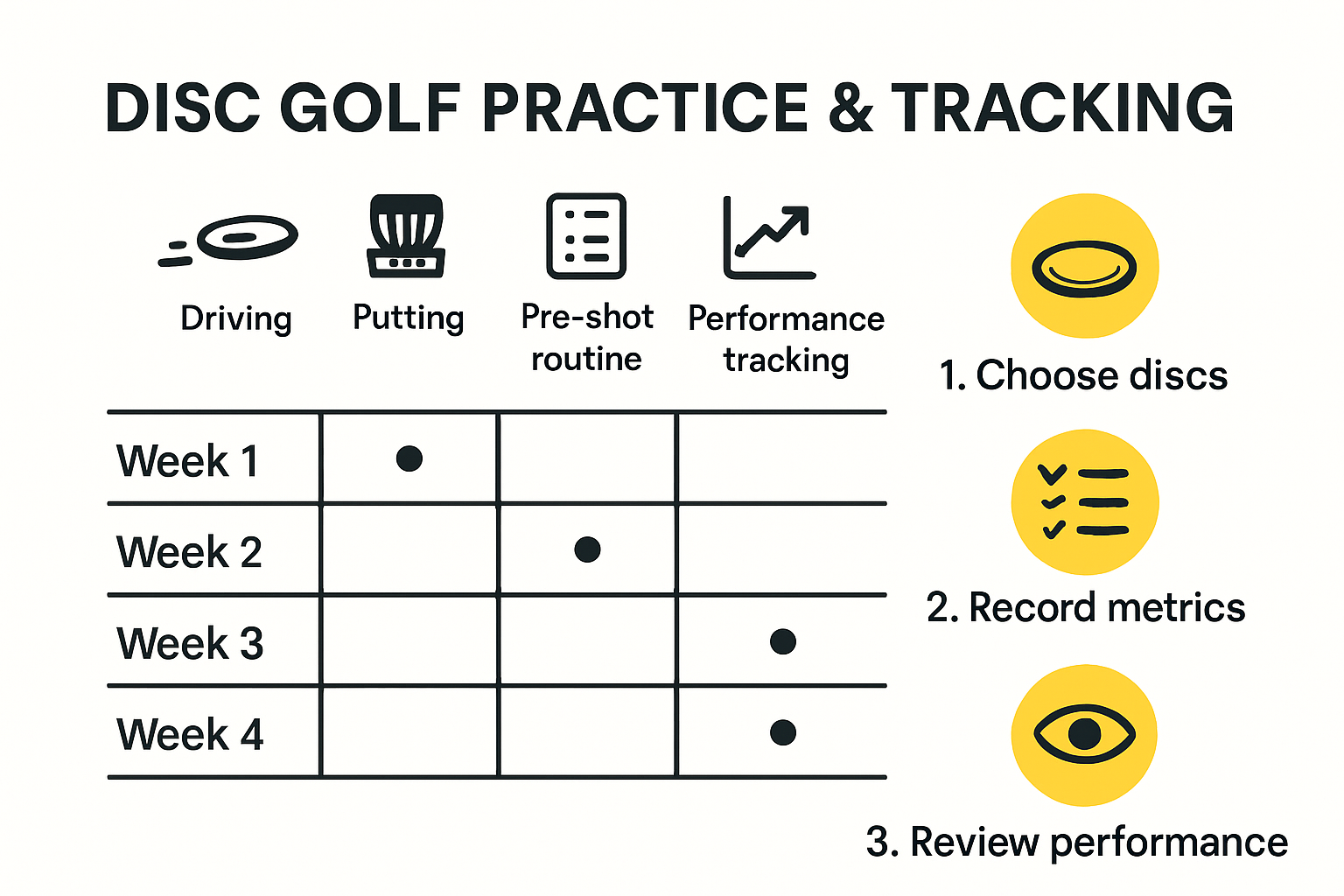
Ready to Put These Disc Golf Tips Into Action?
Are you struggling to choose the right discs or frustrated that your throws are not as accurate as you want? Maybe you want to build better habits around your grip, stance, and pre-shot routine so you can feel more confident at every hole. The essential tips from this article are a great start, but true progress comes from using the best beginner-friendly equipment and having support at every step.

Discover how easy it can be to master disc golf when you have the right discs and expert advice on your side. At GolfDiscs.com, you will find handpicked starter packs, essential guides for selecting beginner discs, and strategies for improving your disc golf basics. Why wait to see real improvement? Shop now and start playing with confidence today.
Frequently Asked Questions
What type of discs should beginners use in disc golf?
Beginners should focus on a putter, a mid-range disc, and a fairway driver. These discs offer better control and stability, helping novices develop consistent throwing techniques.
How can I improve my disc grip and stance?
To improve your grip, use the power grip by securely wrapping your fingers around the disc’s rim and ensuring your thumb is positioned on top. For your stance, keep your feet shoulder-width apart, with your weight balanced properly to generate throwing power.
What are the key techniques for driving in disc golf?
Key driving techniques include backhand, forehand, and overhead throws. Focus on smooth, controlled movements and maintain proper grip and body positioning to enhance distance and accuracy.
Why is a consistent pre-shot routine important in disc golf?
A consistent pre-shot routine helps reduce performance anxiety and improves focus. It establishes a mental anchor that prepares you for each throw, allowing for more calculated and confident execution.