
0

DIY Disc Golf Baskets: Easy Designs for Home Practice
Building your own disc golf basket is more popular than ever and lets you skip the pricey equipment while turning trash into treasure. Most people guess it takes fancy gear or a fat wallet but they are missing the real magic. With just a few basic supplies and a little creative thinking you can make a backyard disc golf basket for a fraction of the cost of official models and some projects even use upcycled 55 gallon drums as the main target. That flips the idea of expensive sports hobbies on its head and opens the door for anyone to take their game to the next level right at home.
Table of Contents
- Choosing Materials For DIY Disc Golf Baskets
- Step-By-Step Basket Building Guide
- Creative Basket Designs On A Budget
- Tips For Setting Up Your Backyard Course
Quick Summary
| Takeaway | Explanation |
|---|---|
| Choose sturdy materials for durability | Use treated lumber and galvanized steel for the frame to enhance weather resistance and longevity. |
| Incorporate quality chains for effective catching | Metal chains of 12-15 links length ensure better catching performance and mimic professional standards. |
| Get creative with budget options | Repurpose materials like old tires or buckets, significantly lowering costs and promoting sustainability. |
| Plan your backyard layout strategically | Measure your space and use natural features to create a challenging, engaging disc golf course. |
| Maintain and ensure safety in your setup | Regularly check your baskets and course for wear, and secure all components to prevent accidents. |
Choosing Materials for DIY Disc Golf Baskets
Creating your own disc golf basket requires careful selection of materials that balance durability, cost effectiveness, and performance. Whether you are a budget conscious player or a hands on enthusiast, understanding the right materials can transform your home practice experience.
Wood and Metal Foundations
Wood and metal are the primary structural materials for DIY disc golf baskets. Pressure treated lumber provides an excellent base for constructing the basket frame. According to HandWiki, traditional DIY baskets often combine wood and metal components to create a sturdy target. Select wooden posts like 4×4 cedar or pressure treated pine that can withstand outdoor conditions. These materials resist rot and provide a stable foundation for your basket.
Below is a summary table comparing common DIY disc golf basket materials, highlighting their advantages and considerations. Use this table to help select the right materials for your project.
| Material | Advantages | Considerations |
|---|---|---|
| Pressure Treated Lumber | Durable, rot-resistant, stable base | Heavier, requires periodic treatment |
| Galvanized Steel Pipe | Rust-resistant, strong, professional look | Can be more expensive, needs cutting |
| Electrical Conduit | Rust-resistant, easy to work with | Less rigid than solid steel pipe |
| 4×4 Cedar Post | Weather-resistant, stable | Can be expensive, heavy |
| Metal Chains (Galvanized/Zinc) | Durable, weather-resistant, effective catching | Needs regular checking for rust |
| 55 Gallon HDPE Drum | Upcycled, budget-friendly, large catching area | Bulky, requires modification |
| Old Bicycle Wheel | Upcycled, circular for chains | Not as durable, may require reinforcement |
For the basket’s structure, galvanized steel pipes or electrical conduit work exceptionally well. These materials are rust resistant and offer the necessary strength to support chains and withstand repeated disc impacts. Typically, a 2 inch diameter pipe creates a professional looking vertical support.
Chain and Catching Components
Chains are critical for creating an authentic disc golf basket experience. Africa Disc Golf United suggests using metal chains similar to those found in professional baskets. Aim for chains approximately 12 to 15 links long, hung in multiple rows to create an effective catching mechanism. Galvanized or zinc plated chains provide the best durability and resistance to weathering.
For the basket catching area, consider repurposing materials like metal buckets, heavy duty plastic drums, or custom welded metal baskets. Zane Middle School’s project demonstrated how a 55 gallon HDPE drum could be effectively transformed into a functional disc golf basket target.
Additional Considerations
Beyond primary materials, consider additional components that enhance your basket’s functionality. Rubber washers or padding can reduce metal on metal noise and protect your discs during practice. Weather resistant spray paint can help protect wooden components and add a personalized touch to your creation.
Budget conscious players can explore creative alternatives. Old bicycle wheels, repurposed tire rims, or even large PVC pipes can serve as innovative basket components. The key is ensuring structural integrity and a consistent catching area.
For those wanting to learn more about professional disc golf basket specifications, our comprehensive guide provides deeper insights into design principles. Your homemade basket might start as a weekend project but could become a cherished training tool that improves your disc golf skills.
Step-by-Step Basket Building Guide
Constructing a DIY disc golf basket requires careful planning, precise measurements, and methodical assembly. This guide will walk you through creating a functional practice basket that can enhance your disc golf skills from the comfort of your home or backyard.
Preparing Your Materials and Tools
Before starting your project, gather all necessary materials and tools. According to Zane Middle School’s DIY project, successful basket construction requires careful material selection. You will need:
- Wooden posts (4×4 pressure treated lumber)
- Galvanized steel pipes or electrical conduit
- Metal chains (12-15 links per strand)
- Mounting hardware
- Power drill
- Saw
- Measuring tape
- Level
- Concrete mix (for stable ground mounting)
- Protective gear (safety glasses, work gloves)
Constructing the Basket Frame
The basket frame is the foundation of your disc golf target. Begin by cutting your wooden post to approximately 5-6 feet in height, ensuring it will provide sufficient vertical clearance. Scout Life emphasizes precision in measurements to create a professional looking result.
Drill mounting holes for your steel pipe basket supports, typically positioned at a 45 degree angle to create the classic disc golf basket silhouette. If installing outdoors, consider using concrete to set your post securely into the ground. This provides stability and prevents wobbling during intense practice sessions.
Assembling Chains and Catching Area
Chain installation determines your basket’s catching performance. Hang multiple rows of chains to create an effective catching mechanism. Space chains evenly around the basket’s circumference, allowing them to swing freely and help catch incoming discs. Create a catching area using a metal bucket, repurposed drum, or custom welded basket mounted to your frame.
Secure chains using sturdy metal rings or hooks, ensuring they can move independently. This allows discs to drop through the chains and into the basket. Test the setup by gently throwing discs to confirm smooth catching action.
Below you’ll find a step-by-step table outlining the general process for building a DIY disc golf basket, summarizing the key actions from preparation to testing.
| Step | Action Description |
|---|---|
| Prepare Materials | Gather lumber, pipes/conduit, chains, hardware, and tools |
| Build Frame | Cut wooden post, set height, drill holes for support arms |
| Secure Foundation | (Optional) Set post in concrete for stable ground mounting |
| Attach Support Arms | Mount steel pipe/conduit to post at proper angles |
| Install Basket | Attach metal bucket/drum/welded basket for catching area |
| Hang Chains | Space and suspend chains evenly on hooks/rings around basket |
| Test & Adjust | Throw discs, check catching area, adjust chains or frame as needed |
For those wanting comprehensive details on professional basket design, our expert guide offers additional insights. Remember that your homemade basket is not just a weekend project but a valuable training tool to improve your disc golf precision and technique.
Creative Basket Designs on a Budget
Creating a disc golf basket doesn’t require a massive investment. With creativity and resourcefulness, players can design functional practice targets using everyday materials that won’t break the bank. Budget friendly approaches can transform ordinary objects into exciting disc golf training tools.
Upcycled Material Designs
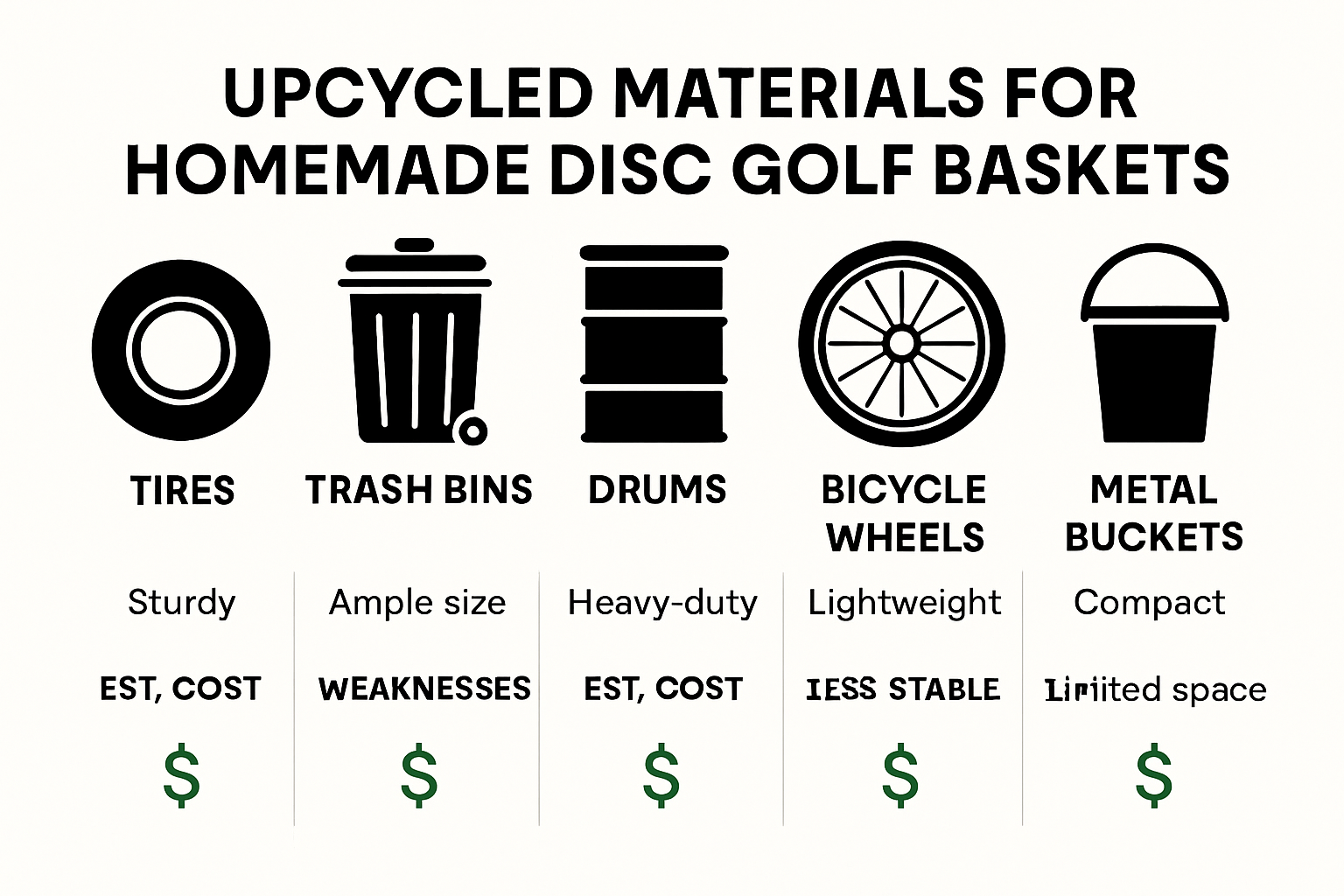
Africa Disc Golf United highlights the potential of repurposing materials for disc golf basket construction. Old tires, trash bins, and scrap metal can become surprisingly effective targets with some imagination. For instance, a large metal bucket mounted on a wooden post can serve as an excellent catching area. Bicycle wheels offer another innovative option, with their circular structure perfect for hanging chains.
The Zane Middle School DIY project demonstrates remarkable ingenuity by constructing a portable disc golf basket from a 55 gallon HDPE drum. This approach not only reduces costs but also promotes sustainability by giving new life to potential waste materials.
Miniature and Indoor Practice Options
Scout Life offers an ingenious solution for those with limited space or budget. Their mini disc golf basket design uses a tin can and paper clips to create a compact practice target. This approach is perfect for indoor training or players with minimal outdoor space. Paper clips can form makeshift chains, while the tin can serves as the catching mechanism.
Consider creating multiple small baskets to set up an indoor putting course. Use cardboard boxes, plastic buckets, or even large plant pots as alternative targets. The key is maintaining a consistent catching area and allowing chains or similar materials to break the disc’s momentum.
Low Cost Construction Tips
Budget conscious disc golf enthusiasts can significantly reduce expenses by shopping smart. Check local hardware stores for discounted or clearance materials. Salvage yards, construction sites, and online marketplaces often have affordable pipes, chains, and mounting hardware. Some players find success with PVC pipes as a lightweight, inexpensive alternative to metal.
When selecting materials, prioritize durability over aesthetics. Galvanized steel pipes from a local hardware store can replace expensive specialized components. Chains can be sourced from industrial supply stores at a fraction of the cost of specialized disc golf chains.
For those seeking more advanced design concepts, our comprehensive guide to disc golf basket specifications offers additional insights. Remember that your homemade basket is a testament to creativity and passion for the sport, not just a target for practice. Each unique design tells a story of innovation and personal commitment to improving disc golf skills.
Tips for Setting Up Your Backyard Course
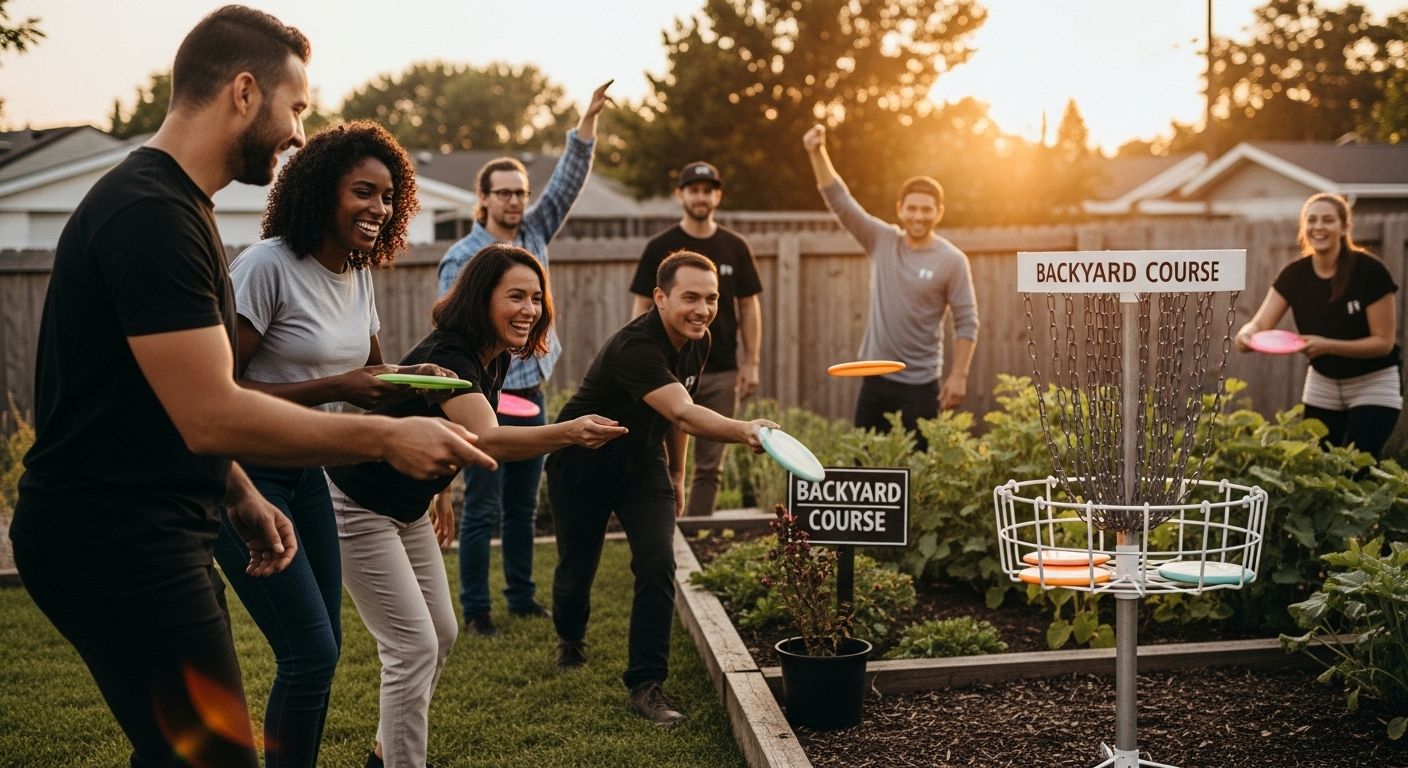
Transforming your backyard into a personalized disc golf practice area requires strategic planning, creativity, and an understanding of space management. By thoughtfully designing your course, you can create an engaging training environment that improves your skills and provides endless entertainment.
Assessing Your Space
PHE America emphasizes the importance of understanding your available space when designing a disc golf course. Begin by measuring your backyard and creating a scaled map. Not all spaces require extensive acreage. Even small yards can accommodate innovative course designs that challenge your throwing techniques.
Consider potential obstacles like trees, garden structures, and landscaping features. These natural elements can serve as exciting course challenges, mimicking the varied terrain of professional disc golf parks. Measure safe throwing distances and ensure no windows or delicate structures are at risk. Create multiple basket positions to vary your practice routine, allowing you to simulate different course scenarios.
Creating Course Variations
Boy Scouts of America recommends using versatile objects to design dynamic course layouts. Hula hoops, sports cones, and existing landscape features can serve as alternative targets. This approach allows for quick course reconfiguration and keeps practice sessions engaging.
Design your course with increasing difficulty levels. Start with shorter, more direct routes and progressively add challenging angles and obstacles. Use existing yard features like garden edges, fence lines, and shrubs to create natural throwing lanes. Consider elevation changes if your yard has slopes, which can add complexity to your practice sessions.
Safety and Maintenance Considerations
The Zane Middle School DIY project highlights the importance of creating a portable and safe disc golf setup. Ensure your baskets are securely anchored and positioned away from breakable objects. Use ground markers or temporary flags to define throwing zones and prevent accidental property damage.
Regularly inspect your homemade baskets and course elements for wear and tear. Wooden posts may require occasional treatment against weather damage, and chains should be checked for rust or weakness. Consider creating removable basket positions that can be stored during adverse weather conditions.
For players seeking to enhance their understanding of disc golf fundamentals, our comprehensive guide offers additional insights. Remember, your backyard course is more than just a practice space it’s a personal playground for developing disc golf skills and enjoying outdoor recreation.
Frequently Asked Questions
How can I make a DIY disc golf basket at home?
You can build a DIY disc golf basket using materials like pressure-treated lumber for the frame, galvanized steel pipes for the support, and metal chains for the catching area. Follow a step-by-step guide that includes preparing your materials, constructing the frame, and assembling the chains.
What materials are best for constructing a disc golf basket?
For durability, consider using pressure-treated lumber or galvanized steel for the frame, along with metal chains that are approximately 12-15 links long. You can also use upcycled materials like old tires or 55-gallon drums for budget-friendly options.
How can I ensure my DIY disc golf basket functions well?
To ensure effective performance, use quality materials for the frame and chains. Space the chains evenly around the basket to allow them to catch discs effectively. Test the setup by throwing discs to confirm it catches smoothly.
How can I set up a backyard disc golf course?
Assess your backyard space, consider natural obstacles, and plan your course layout strategically. Use existing features like trees and fences to create challenges and vary basket positions to keep practice engaging.
Upgrade Your DIY Practice With Pro-Level Disc Golf Gear
You understand the satisfaction of building your own disc golf basket at home. But after all your hard work, are you still struggling with inconsistent putts or frustrated by dull, worn-out discs? Many DIY enthusiasts find that homemade baskets help improve accuracy, but real progress comes when you pair your creative setups with high-quality discs and equipment you can trust.

The real game changer is using professional discs and gear designed to complement your practice, helping you boost your confidence and take your skills even further. Visit GolfDiscs.com today to explore a wide selection of advanced discs and top-rated accessories that work perfectly with your custom basket. Do not let budget gear hold you back. Make the most of your DIY setup and shop now for equipment that brings out your best game.