
0
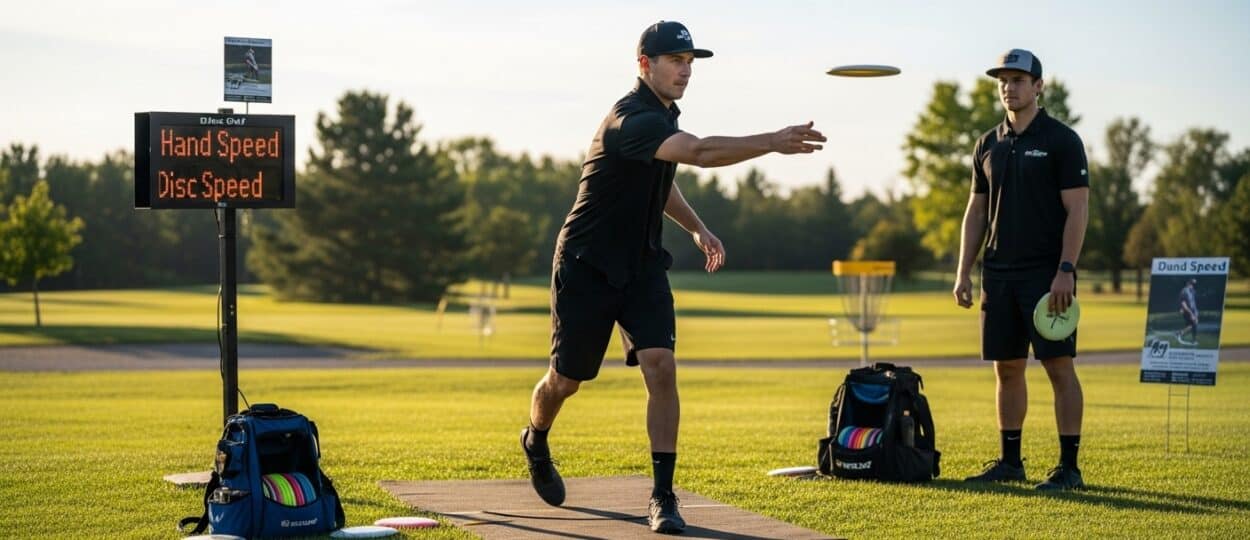
Understanding Improving Hand Speed for Better Disc Golf
Hand speed is the hidden engine behind powerful disc golf throws and precision in sports like baseball and tennis. Some players can generate throws with such force that they reach speeds rivaling over 60 miles per hour, changing the entire dynamic of the game. Most athletes think it all comes down to sheer arm strength, but the real secret is how fast and efficiently you can coordinate every muscle and nerve for explosive motion.
Table of Contents
- Defining Hand Speed And Its Role In Sports
- The Importance Of Hand Speed In Disc Golf Performance
- How Hand Speed Influences Throwing Mechanics
- Key Factors Affecting Hand Speed And Coordination
- Integrating Hand Speed Training Into Your Practice
Quick Summary
| Takeaway | Explanation |
|---|---|
| Hand speed enhances throwing distance. | Increased hand speed allows athletes to throw discs farther and more accurately, crucial for competitive performance. |
| Develop explosiveness through targeted training. | Focus on strength and plyometric exercises to improve fast-twitch muscle fiber recruitment, enhancing hand speed. |
| Master grip technique for optimal release. | Proper thumb positioning and grip optimize energy transfer during disc release, improving throwing effectiveness. |
| Incorporate reactive drills for agility. | Training that requires quick responses enhances neurological efficiency and improves hand speed even under pressure. |
| Synchronized movement enhances coordination. | Developing whole-body coordination processes ensures efficient energy transfer, boosting hand speed and overall performance. |
Defining Hand Speed and Its Role in Sports
Hand speed is a critical athletic performance metric that goes far beyond simple movement velocity. In sports like disc golf, baseball, tennis, and martial arts, hand speed represents the rate and efficiency with which an athlete can move their hand through a specific motion, directly impacting power, accuracy, and overall performance.
The Biomechanical Foundation of Hand Speed
At its core, hand speed is a complex interplay of neuromuscular coordination, muscle fiber composition, and kinetic energy transfer. Research from sports biomechanics reveals that hand speed isn’t just about how quickly a limb moves, but how effectively an athlete can generate and channel explosive power through precise muscular recruitment.
Key components of hand speed include:
- Muscle Fiber Composition: Fast-twitch muscle fibers enable rapid, powerful contractions
- Neurological Efficiency: How quickly nerve signals transmit movement commands
- Kinetic Chain Engagement: The sequential transfer of energy from lower body through core to upper extremities
Performance Implications Across Sports
In disc golf specifically, hand speed determines how far and accurately a player can throw a disc. Higher hand speed translates directly into greater throwing distance and more controlled trajectories. Athletes with superior hand speed can generate more rotational velocity, enabling discs to travel further with less physical exertion.
Physiologically, developing hand speed requires targeted training that focuses on:
- Improving muscular explosiveness
- Enhancing neuromuscular coordination
- Developing proper biomechanical throwing techniques
- Strengthening core and peripheral muscle groups
Understanding hand speed is not just about raw velocity, but about the sophisticated integration of physical, neurological, and technical skills that transform basic movement into athletic excellence.
The Importance of Hand Speed in Disc Golf Performance
In disc golf, hand speed is not just a technical skill but a fundamental performance multiplier that separates amateur players from advanced competitors. The ability to generate rapid, controlled hand movement directly translates into throwing distance, accuracy, and overall game effectiveness.
Mechanics of Hand Speed in Disc Throwing
Research from biomechanical studies demonstrates that hand speed involves precise coordination between muscle groups, enabling players to generate maximum rotational velocity during disc release. Thumb positioning and grip technique play crucial roles in optimizing the energy transfer from body to disc.
Key performance factors influenced by hand speed include:
- Distance potential of disc throws
- Accuracy and trajectory control
- Energy efficiency during throwing motions
- Reduced physical strain on muscles
Performance Impact and Strategic Advantages
Advanced players understand that hand speed is more than raw power. It represents a sophisticated integration of neurological efficiency, muscular coordination, and technical skill. Faster hand speeds allow players to:
- Generate greater disc spin rates
- Achieve longer throwing distances
- Execute more complex throwing techniques
- Adapt quickly to different course challenges
Interested players might want to explore advanced disc golf techniques to further understand skill development. By systematically improving hand speed, disc golfers can transform their game from recreational to competitive, turning physical mechanics into strategic performance advantages.
This table compares key benefits that improving hand speed offers disc golf players, highlighting the strategic and mechanical advantages referenced in the content.
| Benefit | How It Improves Performance |
|---|---|
| Greater Throwing Distance | Enables longer disc throws with less physical exertion |
| Improved Accuracy and Trajectory | Enhances control of disc direction and consistency |
| Increased Disc Spin Rates | Provides more stable flights and advanced shot shaping |
| Energy Efficiency | Reduces muscle strain and fatigue during repeated throws |
| Adaptability to Course Challenges | Allows use of varied techniques and rapid adjustments in different conditions |
How Hand Speed Influences Throwing Mechanics
Throwing mechanics in disc golf represent a sophisticated biomechanical sequence where hand speed serves as a critical catalyst for performance. Each throwing motion transforms potential energy into kinetic output, with hand speed determining the precision and power of disc trajectory.
Biomechanical Energy Transfer
Research from disc golf biomechanics reveals that hand speed is not an isolated movement, but a complex interaction of muscular coordination and energy transfer. The throwing motion involves a sequential engagement of muscle groups, transforming ground force through the kinetic chain into rotational disc velocity.
Key biomechanical components include:
- Lower body weight shift and ground engagement
- Rotational torque generation through core muscles
- Precise shoulder and arm acceleration
- Optimal wrist snap during disc release
Technical Precision of Hand Movement
Hand speed directly influences three critical throwing parameters: launch angle, spin rate, and initial velocity. Players who master hand speed can manipulate these parameters with remarkable precision, allowing for controlled throws across varied distances and terrains.
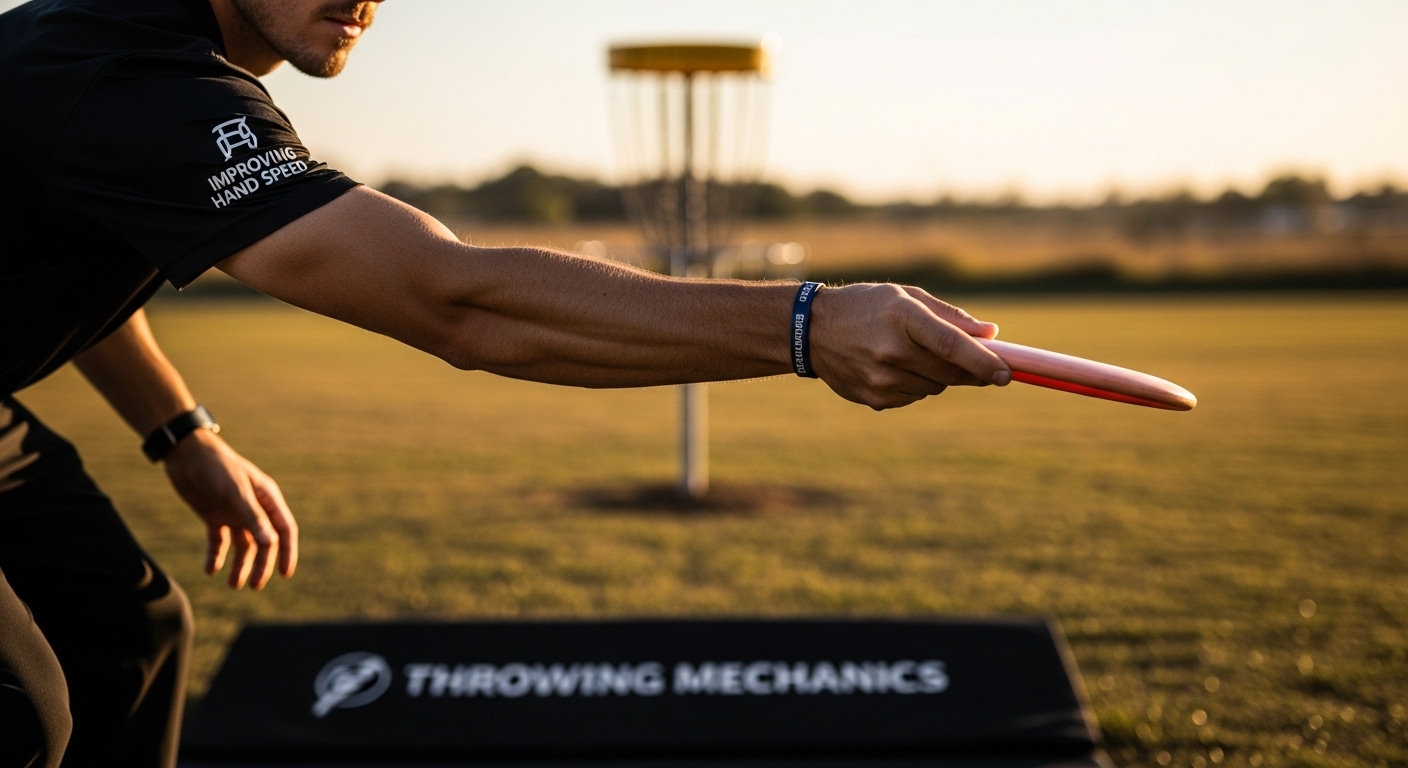
Advanced players understand that hand speed involves:
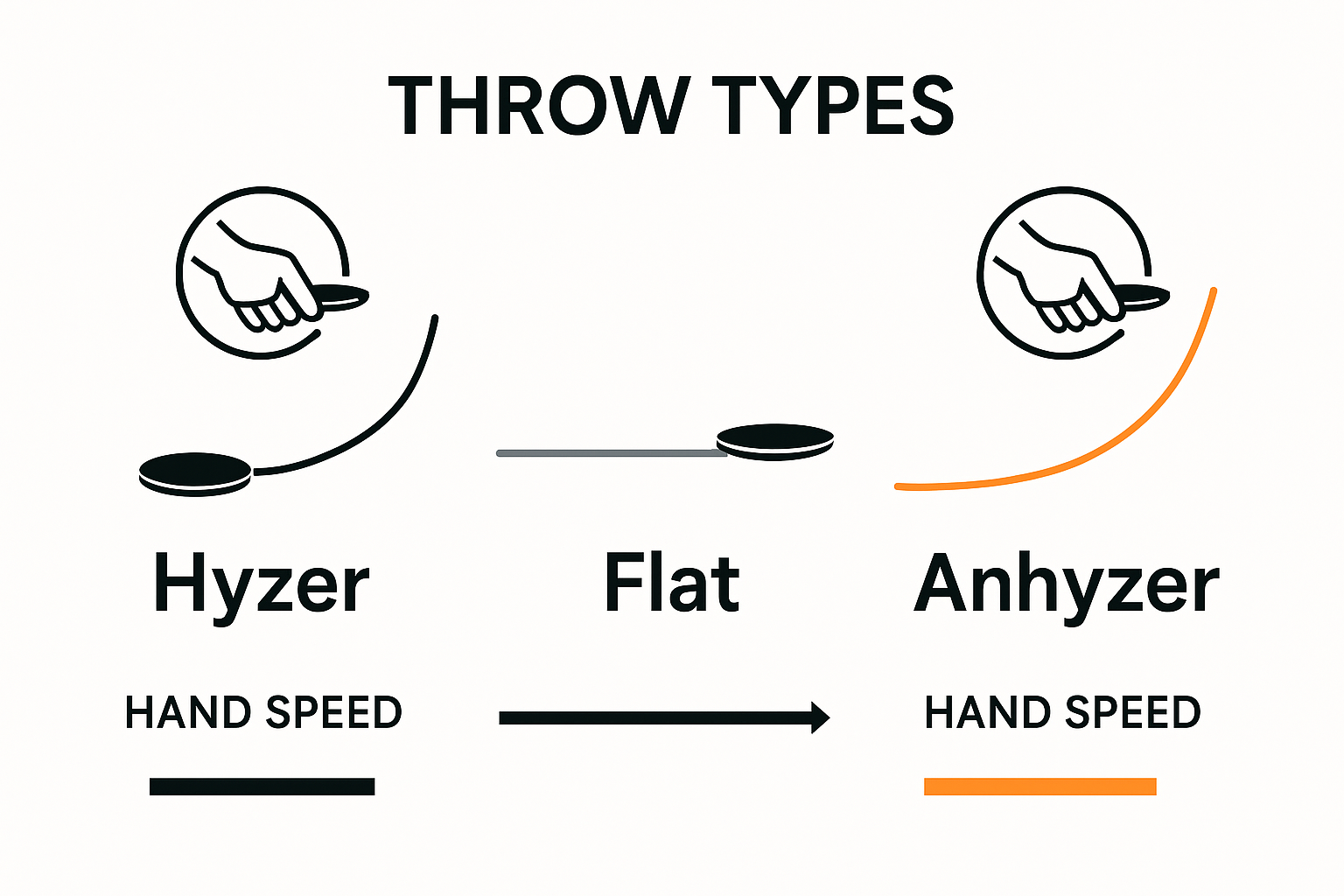
- Minimizing energy loss during motion transfer
- Maintaining consistent release point
- Adapting technique to disc type and wind conditions
- Developing muscle memory for repeatable mechanics
By exploring advanced disc golf techniques, players can refine their understanding of these intricate mechanical relationships, transforming hand speed from a raw physical attribute into a strategic performance tool.
Key Factors Affecting Hand Speed and Coordination
Hand speed and coordination in disc golf represent a complex interplay of neurological, muscular, and biomechanical factors that determine an athlete’s throwing performance. Understanding these interconnected elements provides insights into how players can systematically improve their disc golf skills.
The table below summarizes the key biomechanical and neurological factors affecting hand speed and coordination as discussed in the article.
| Factor | Description |
|---|---|
| Neural Pathway Efficiency | Speed at which nerve signals transmit movement commands |
| Motor Unit Recruitment | Ability to quickly activate muscle fibers |
| Proprioceptive Awareness | Body’s spatial awareness during movement |
| Muscle Fiber Composition | Ratio of fast-twitch to slow-twitch muscle fibers |
| Trunk Rotational Power | Strength and speed of core muscle rotation |
| Weight Transfer Optimization | Effective shifting of body weight during throws |
| Body Alignment Consistency | Maintaining proper body positioning throughout motion |
Neurological and Muscular Foundations
Research on motor coordination reveals that hand speed is not simply about muscle strength, but about the intricate communication between the nervous system and muscular structures. Neurological efficiency determines how quickly nerve signals transmit movement commands, while muscle fiber composition enables rapid, powerful contractions.
Critical neurological components include:
- Neural Pathway Efficiency: Speed of signal transmission
- Motor Unit Recruitment: Ability to activate muscle fibers quickly
- Proprioceptive Awareness: Spatial understanding of body movement
- Muscle Fiber Composition: Ratio of fast-twitch to slow-twitch muscles
Biomechanical Coordination Strategies
Successful hand speed development requires a holistic approach that integrates multiple physical systems.
Whole-body coordination plays a more significant role than isolated arm strength. Players must develop a synchronized movement pattern that transforms ground force through the kinetic chain, converting potential energy into dynamic disc velocity.
Key biomechanical coordination strategies involve:
- Developing trunk rotational power
- Maintaining consistent body alignment
- Optimizing weight transfer during throw
- Minimizing energy leakage between movement segments
By exploring advanced disc golf techniques, athletes can refine their understanding of these intricate coordination mechanisms, transforming theoretical knowledge into practical performance improvements.
Integrating Hand Speed Training into Your Practice
Effective hand speed development in disc golf requires a strategic, multifaceted approach that goes beyond simple repetitive throwing. Athletes must design comprehensive training programs that systematically enhance neurological efficiency, muscular coordination, and biomechanical precision.
Targeted Neurological Conditioning
Research exploring training methodologies demonstrates that hand speed improvement relies on sophisticated neuromuscular training techniques. Modern approaches emphasize real-time feedback mechanisms and reactive training protocols that challenge the nervous system’s adaptability and response mechanisms.
Key neurological training components include:
- Reactive Drills: Exercises that demand rapid response and decision making
- Sensory Integration: Activities challenging hand-eye coordination
- Complex Movement Sequences: Drills requiring synchronized muscle group activation
- Precision Skill Development: Exercises focusing on controlled, deliberate movements
Integrated Physical Conditioning
Successful hand speed training transcends isolated muscle development. Holistic conditioning involves creating a comprehensive program that addresses strength, flexibility, and movement efficiency. Players must develop a synchronized approach that integrates core strength, rotational power, and dynamic stability.
Critical conditioning strategies involve:
- Resistance band training for explosive movements
- Plyometric exercises targeting fast-twitch muscle fibers
- Mobility work enhancing range of motion
- Cross-training with complementary athletic disciplines
By exploring advanced disc golf techniques, athletes can transform theoretical knowledge into practical performance improvements, systematically elevating their hand speed and overall throwing capabilities.
Transform Your Hand Speed Into Game-Winning Throws
You have just learned how hand speed and coordinated throwing mechanics are crucial for better disc golf performance. If you struggle to achieve longer throws or feel frustrated by inconsistent distance and accuracy, you are not alone. Many disc golfers face these same obstacles. Real progress begins when you put technical insights about hand speed and precise energy transfer into action with the right equipment and support.

Your next step is simple. Visit golfdiscs.com to discover discs and gear designed for high-speed throws and reliable control. If you want even more practical skill-building advice, explore our in-depth frisbee golf tips and see how choosing the right disc type can maximize your training. Do not wait for another season to pass by. Get the tools and knowledge you need today so you can see immediate improvements in your hand speed and throwing results. Start at golfdiscs.com and turn your new skills into real results on the course.
Frequently Asked Questions
What is hand speed and why is it important in disc golf?
Hand speed refers to the rate and efficiency at which an athlete can move their hand through a throwing motion. In disc golf, higher hand speed directly translates to greater throwing distance, accuracy, and overall performance.
How can I improve my hand speed for disc golf?
Improving hand speed can be achieved through targeted training that focuses on enhancing neuromuscular coordination, muscle explosiveness, and proper biomechanical techniques. Exercises like resistance training, plyometrics, and reactive drills can be beneficial.
What role does muscle fiber composition play in hand speed?
Muscle fiber composition is crucial for hand speed, as fast-twitch muscle fibers enable rapid and powerful contractions. Players should focus on developing these fibers through specific training exercises to enhance their hand speed.
How does hand speed affect throwing mechanics in disc golf?
Hand speed significantly impacts throwing mechanics by influencing parameters such as launch angle, spin rate, and initial velocity. Mastering hand speed allows players to control these factors, which can improve throwing accuracy and distance.