
0

Understanding Common Disc Golf Injuries and Their Impact
Disc golf might look like a stroll through the woods with a flying disc, but injuries are far more common than people think. Nearly 93% of disc golf injuries develop slowly over time, not from a single mistake. The real surprise is that most of these injuries come from silent, repetitive motions—not dramatic falls or wild throws.
Table of Contents
- What Are Common Disc Golf Injuries?
- Why Do Common Disc Golf Injuries Occur?
- How to Recognize Common Disc Golf Injuries
- The Impact of Common Disc Golf Injuries on Play
- Preventative Measures for Common Disc Golf Injuries
Quick Summary
| Takeaway | Explanation |
|---|---|
| Understand common injuries | Familiarize yourself with injuries like tennis elbow and shoulder strains that often occur in disc golf. |
| Recognize early symptoms | Look for signs such as persistent pain or swelling to prevent chronic issues from developing. |
| Prioritize proper technique | Focus on correct throwing mechanics and body alignment to minimize joint stress and injury risk. |
| Engage in strength training | Develop shoulder, core, and flexibility strength to better withstand the demands of the sport. |
| Incorporate warm-ups and rest | Always warm up before playing and allow for rest to reduce the likelihood of overuse injuries. |
What Are Common Disc Golf Injuries?
Disc golf is an engaging outdoor sport that combines athleticism and precision, but like many physical activities, it comes with potential injury risks. Understanding the most prevalent disc golf injuries helps players take proactive steps to prevent and manage potential health challenges.
Repetitive Motion Injuries
The dynamic throwing motions in disc golf can lead to significant strain on specific muscle groups and joints. Players frequently experience overuse injuries resulting from repeated throwing mechanics. The most common repetitive motion injuries include:
- Lateral epicondylitis (tennis elbow)
- Rotator cuff strains
- Shoulder impingement syndrome
- Wrist tendonitis
These conditions develop gradually through consistent stress on muscles and tendons, particularly when players do not employ proper throwing techniques or adequately warm up before playing.
Below is a table summarizing the most common disc golf injuries, their affected areas, and the initial symptoms players should watch for to enable early detection.
| Injury Type | Affected Area | Common Initial Symptoms |
|---|---|---|
| Lateral Epicondylitis (Tennis Elbow) | Elbow | Persistent lateral pain, reduced grip strength |
| Rotator Cuff Strain | Shoulder | Sharp pain during throws, limited range of motion |
| Shoulder Impingement Syndrome | Shoulder | Pain during overhead throws, clicking sensations |
| Wrist Tendonitis | Wrist | Sensitivity or pain on disc release, reduced flexibility |
Upper Body and Joint Stress
Disc golf requires complex biomechanical movements that place substantial stress on the upper body. Research indicates that approximately 21.2% of disc golf injuries involve the elbow, while 16.6% impact the shoulder. These statistics underscore the physical demands of the sport.
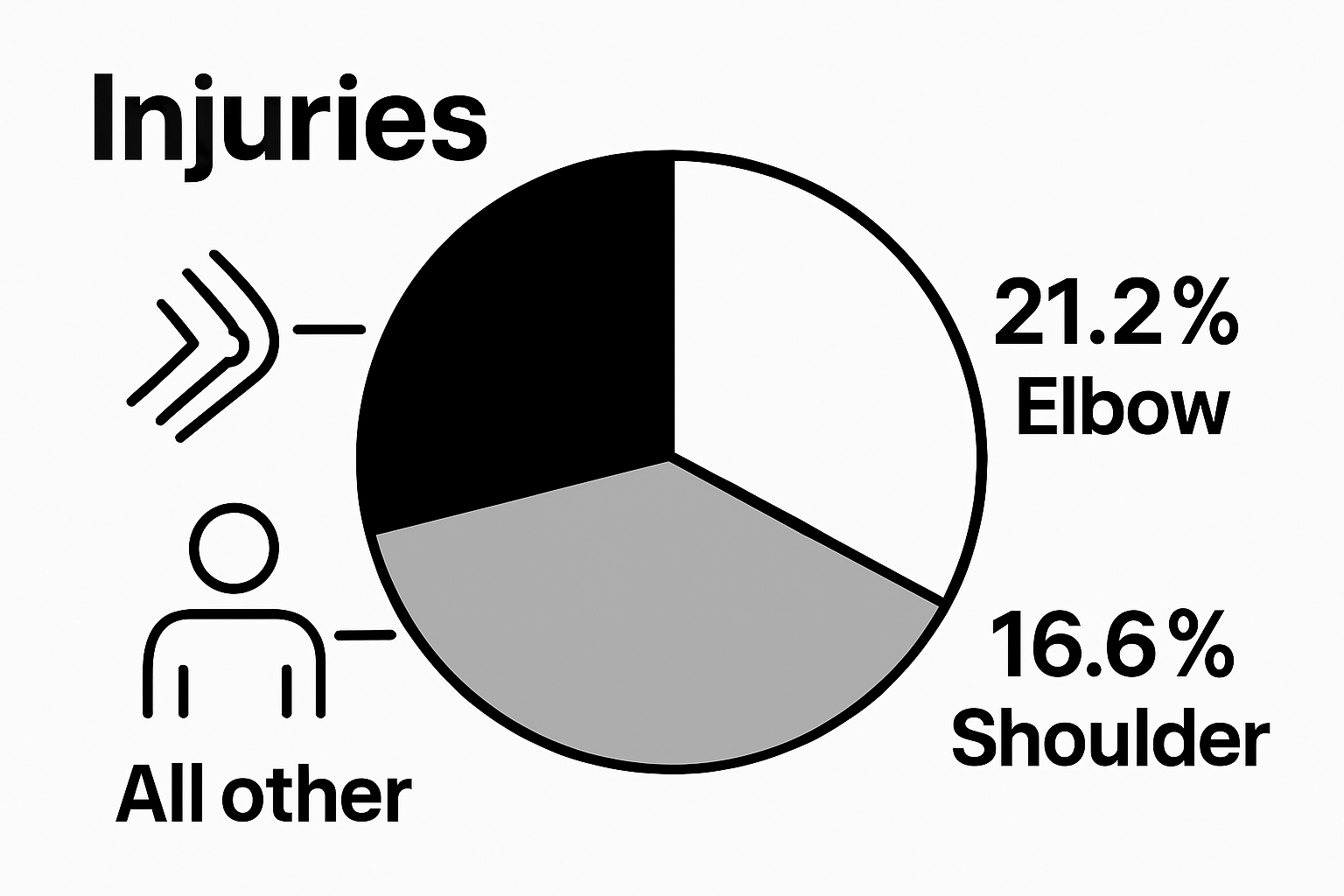
The overhead throwing motion, which is fundamental to disc golf, creates significant torque on joints and muscles. Players who do not maintain proper form or who engage in extended play without adequate rest are more susceptible to developing chronic conditions.
If you want to learn more about preventing these injuries, check out our guide on disc golf techniques that can help minimize your risk of strain and injury.
Why Do Common Disc Golf Injuries Occur?
Understanding the underlying causes of disc golf injuries is crucial for players seeking to prevent and minimize potential health risks. Research on Danish disc golf players reveals that approximately 93% of injuries develop gradually, highlighting the importance of recognizing the sport’s biomechanical challenges.
Biomechanical Stress and Throwing Techniques
Disc golf injuries primarily stem from the complex and repetitive throwing motions that place significant strain on specific muscle groups and joints. Improper throwing techniques are a major contributor to injury development. Key biomechanical factors include:
- Inconsistent arm and shoulder mechanics
- Lack of proper warm-up and stretching
- Overextension during throwing motions
- Insufficient muscle conditioning
The overhead throwing motion creates substantial torque on the shoulder, elbow, and wrist, making precise technique essential for injury prevention.
Overuse and Physical Conditioning
Chronic injuries in disc golf often result from cumulative stress on the body. Players who do not gradually build their physical endurance or who engage in extended play without adequate rest are more susceptible to developing musculoskeletal problems. The repetitive nature of disc golf throws can lead to gradual tissue damage and inflammation.
Learn more about preventing disc golf strain through proper technique and physical preparation. Understanding these injury mechanisms allows players to develop strategies that minimize risk while enjoying the sport.
How to Recognize Common Disc Golf Injuries
Recognizing disc golf injuries early is critical for preventing long-term damage and maintaining optimal physical health. According to research on disc golf athletes, understanding the subtle signs of potential injury can help players take proactive steps toward recovery and prevention.
Physical Symptoms and Warning Signs
Disc golf injuries often manifest through specific physical indicators that players should carefully monitor. Early detection is key to preventing chronic conditions. Players should be alert to the following symptoms:
- Sharp or persistent pain during or after throwing
- Reduced range of motion in shoulder or elbow
- Swelling or inflammation around joints
- Weakness or instability in throwing arm
- Tingling or numbness in hand or arm
These symptoms typically indicate potential muscle strain, tendon inflammation, or joint stress that requires immediate attention and potentially professional medical evaluation.
Location-Specific Injury Indicators
Different areas of the body exhibit unique signs of disc golf related injuries. The shoulder and elbow are particularly vulnerable, with specific indicators including:
- Shoulder: Pain during overhead throws, limited rotation, clicking or popping sensations
- Elbow: Persistent lateral pain, difficulty gripping discs, reduced throwing power
- Wrist: Increased sensitivity during release, reduced flexibility
Learn more about preventing disc golf strain and understanding your body’s signals. Professional athletes recommend tracking these symptoms and consulting sports medicine experts if warning signs persist.
The Impact of Common Disc Golf Injuries on Play
Research involving 883 disc golf players reveals the profound consequences of injuries on player performance and enjoyment. Approximately 57.6% of injured participants experienced significant disruptions in their sporting and daily activities, underscoring the serious implications of disc golf related injuries.
This table organizes published statistics showing the prevalence and impact of disc golf injuries on players, highlighting where injuries most frequently occur and how they can affect sport participation.
| Statistic | Percentage/Value | Explanation |
|---|---|---|
| Injuries that develop gradually (overuse) | 93% | Most disc golf injuries emerge over time with repetition |
| Elbow involvement in disc golf injuries | 21.2% | Percentage of injuries affecting the elbow joint |
| Shoulder involvement in disc golf injuries | 16.6% | Percentage of injuries impacting the shoulder |
| Players reporting disruptions in sporting/daily activity | 57.6% | Over half experience significant disruption after injury |
Performance and Competitive Limitations
Injuries dramatically alter a player’s competitive capabilities, restricting their throwing techniques and overall game strategy. Physical limitations can manifest in multiple ways:
- Reduced throwing distance and accuracy
- Decreased power generation during throws
- Compromised throwing mechanics
- Increased recovery time between tournament rounds
- Potential long-term skill regression
These performance constraints not only impact individual play but can also significantly diminish a player’s ranking and competitive potential.
Psychological and Emotional Consequences
Beyond physical restrictions, disc golf injuries carry substantial psychological burdens. Mental resilience becomes crucial when players confront potential long-term performance challenges. Emotional impacts include:
- Loss of confidence in throwing techniques
- Increased anxiety about re-injury
- Potential withdrawal from competitive play
- Frustration with rehabilitation processes
- Decreased overall sporting motivation
Learn more about maintaining disc golf performance and understanding the holistic challenges of sport-related injuries. Professional athletes emphasize the importance of comprehensive recovery strategies that address both physical and psychological dimensions of injury management.
Preventative Measures for Common Disc Golf Injuries
Research from the Norwegian School of Sport Sciences emphasizes proactive strategies to mitigate injury risks in disc golf. Preventing injuries requires a comprehensive approach that addresses physical conditioning, technique, and strategic play management.
Physical Conditioning and Strength Training
Muscular preparation is fundamental to injury prevention in disc golf. Players must develop specific muscle groups to withstand the sport’s repetitive throwing motions. Critical conditioning elements include:
- Shoulder and rotator cuff strengthening exercises
- Core muscle stabilization training
- Flexibility and mobility routines
- Progressive resistance training
- Cardiovascular endurance development
Targeted strength training helps players build resilience against the biomechanical stress inherent in disc golf throwing techniques.
Technical Skill and Throwing Mechanics
Proper throwing mechanics dramatically reduce injury potential. Players should focus on developing techniques that minimize unnecessary joint stress and optimize movement efficiency:
- Maintaining correct body alignment during throws
- Developing smooth, controlled release mechanisms
- Understanding weight transfer and momentum principles
- Practicing gradual technique refinement
- Utilizing video analysis for mechanical assessment
Explore advanced throwing techniques to enhance your understanding of biomechanically sound movement patterns. Professional disc golfers consistently emphasize that technical precision is as crucial as physical preparation in preventing long-term injuries.
Protect Your Game and Play with Confidence
Are pain, strain, or injury holding you back from enjoying disc golf at your best? This article highlights how repetitive motion injuries, joint stress, and improper technique can take the fun out of every round. Your passion for the game does not need to come at the cost of your health. With the right disc golf gear and knowledge, you can reduce your risk and get back to throwing confidently.

Do not let discomfort become a long-term setback. Discover discs and equipment built for performance and injury prevention at golfdiscs.com. Looking to further protect your joints and improve your technique? Check out our tips on disc golf basics and essential techniques. For advanced players aiming for safer throws, explore disc golf throwing techniques. Upgrade your gear and knowledge today so every round is safer and more enjoyable.
Frequently Asked Questions
What are the most common disc golf injuries?
Disc golf injuries commonly include lateral epicondylitis (tennis elbow), rotator cuff strains, shoulder impingement syndrome, and wrist tendonitis. These injuries often result from repetitive throwing motions and improper techniques.
How can I prevent disc golf injuries?
Preventing disc golf injuries involves proper physical conditioning, including strengthening shoulder and core muscles, maintaining flexibility, and using correct throwing mechanics. Gradually building endurance and ensuring proper warm-up before play are also crucial.
What are the symptoms of disc golf injuries?
Symptoms of disc golf injuries can include sharp or persistent pain during throwing, reduced range of motion, swelling around joints, weakness in the throwing arm, and tingling sensations. Early detection is key to preventing long-term damage.
How do disc golf injuries impact performance?
Disc golf injuries can significantly reduce throwing distance and accuracy, compromise throwing techniques, and increase recovery time between rounds. They may also lead to psychological effects such as decreased confidence and increased anxiety about re-injury.