
0

What is a Midrange Disc? Understanding Its Role in Disc Golf
Disc golf is all about control and precision, and the midrange disc quietly sits at the heart of most winning strategies. Think about this: these discs cover distances ranging from 50 to 300 feet, making them more than just a bridge between drivers and putters. Most surprising is that pro players often pack several different midranges, each offering its own flight path, showing there is a lot more to these discs than meets the eye.
Table of Contents
- Defining A Midrange Disc: Key Features And Types
- The Importance Of Midrange Discs In Disc Golf Strategy
- How Midrange Discs Work: Flight Path And Stability
- Choosing The Right Midrange Disc For Your Play Style
- Real-World Examples: Popular Midrange Discs And Their Uses
Quick Summary
| Takeaway | Explanation |
|---|---|
| Midrange discs bridge distance and control | They provide consistent flight paths for moderate distances, crucial for both beginners and advanced players. |
| Mastering midranges enhances skills | Midrange discs help develop throwing techniques and mechanics, improving overall disc golf performance. |
| Select discs based on playing style | Choose midrange discs aligned with your throwing technique and skill level for optimal performance. |
| Understand stability for shot variation | Stability ratings affect flight paths; selecting the right disc helps manipulate shot trajectories effectively. |
| Professional players use multiple midranges | Advanced golfers carry various discs to adapt to different course challenges and throwing conditions. |
Defining a Midrange Disc: Key Features and Types
In disc golf, a midrange disc serves as a versatile and crucial tool that bridges the gap between long-distance drivers and precise putting discs. These discs are designed to provide golfers with controlled, predictable flight paths across moderate distances, typically ranging from 50 to 300 feet. Learn more about midrange disc characteristics.
Anatomy of a Midrange Disc
Midrange discs are characterized by specific design elements that distinguish them from other disc types. They feature a wider rim width compared to putters but narrower than drivers, which allows for enhanced grip and control.
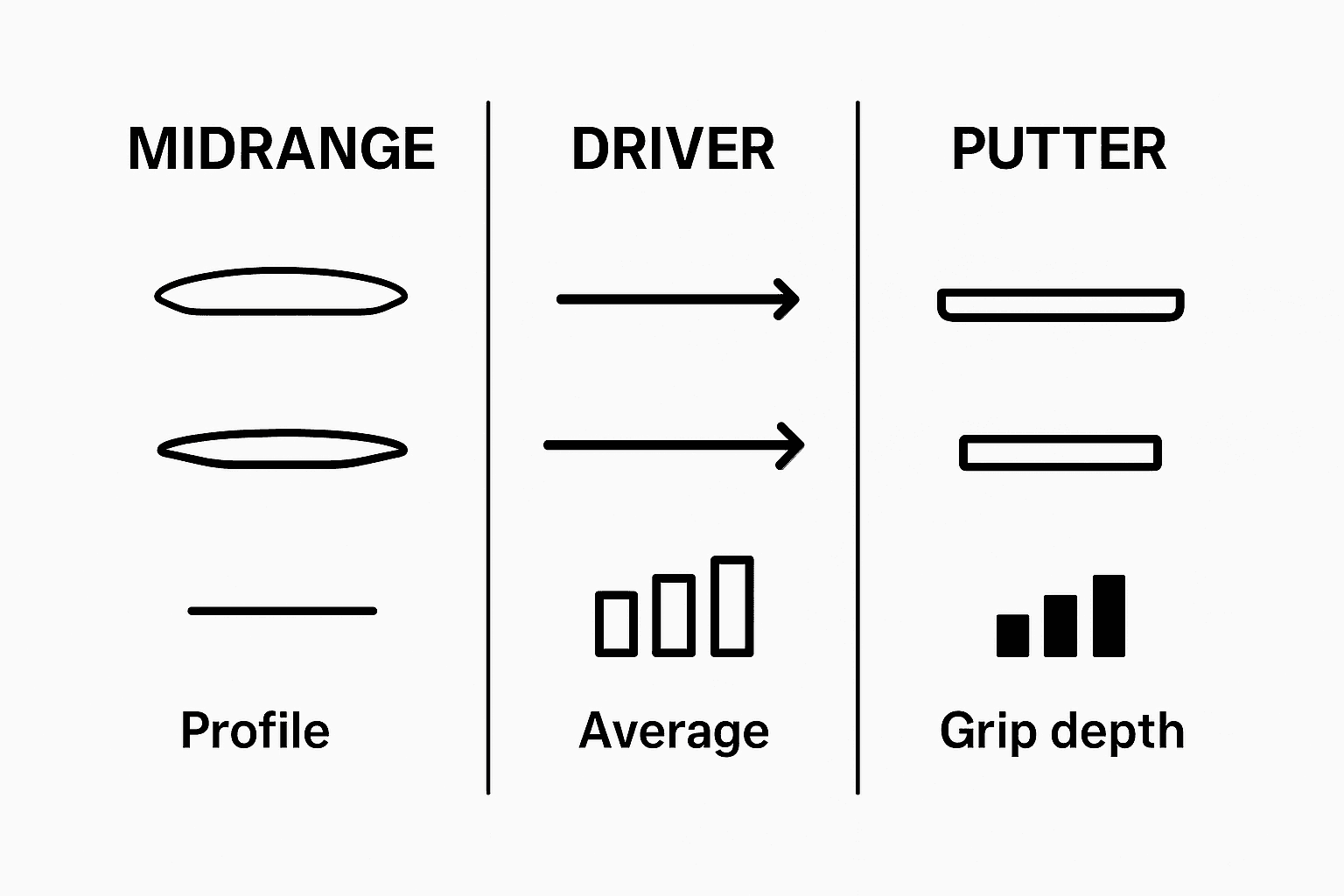 Typically, these discs have a thickness between 1.5 to 2 centimeters and weigh approximately 165 to 180 grams, providing players with a balanced and predictable flight profile.
The table below summarizes the main physical characteristics of midrange discs to clarify what makes them unique from other disc golf discs.
| Characteristic | Description |
|---|---|
| Rim Depth | Moderate depth, wider than putters |
| Edge Profile | Smoother than drivers, rounded for grip |
| Wing Design | Less pronounced than drivers |
| Thickness | Typically 1.5 – 2 cm |
| Weight | Around 165 – 180 grams |
| Flight Path | More stable and neutral |
| Control | Enhanced grip and predictability |
Key Physical Characteristics:
- Moderate rim depth
- Smoother edge profile
- Less pronounced wing design
- More stable flight trajectory
Flight Dynamics and Performance
The unique design of midrange discs enables them to maintain consistent performance across various throwing techniques. Unlike overstable or understable drivers, midrange discs offer a more neutral flight path, making them ideal for players developing their technique or navigating complex course layouts. Disc golf experts recommend midrange discs for approach shots, navigating wooded sections, and executing controlled throws that require precision over raw power.
Advanced players often carry multiple midrange discs with subtle variations in stability, allowing them to adapt to different course conditions and throwing styles. Check out our top midrange discs for more insights into selecting the right disc for your gameplay.
The Importance of Midrange Discs in Disc Golf Strategy
Midrange discs play a pivotal role in a disc golfer’s strategic arsenal, serving as the Swiss Army knife of throwing techniques. Competitive disc golf players recognize these discs as essential tools for navigating complex course layouts and executing precision shots that require nuanced control.
Versatility in Course Navigation
Unlike drivers designed for maximum distance or putters meant for final basket approaches, midrange discs excel in intermediate distance scenarios. They provide players with the unique ability to throw accurate shots through tight wooded corridors, around obstacles, and across moderate distances where power and precision must be balanced. Professional players often refer to midrange discs as their “control discs” because they offer predictable flight paths and consistent performance.
Strategic Advantages of Midrange Discs:
- Enhanced accuracy compared to drivers
- Reliable trajectory in challenging terrains
- Reduced wind susceptibility
- Greater control over shot shaping
Performance Considerations and Skill Development
For emerging disc golfers, midrange discs serve as critical learning instruments. Explore our recommended midrange disc selection to understand how different stability ratings impact shot execution. Beginners can develop fundamental throwing mechanics by mastering midrange techniques, which require a refined blend of power, angle control, and release precision.
Advanced players leverage midrange discs to execute complex shot types, including hyzer, anhyzer, and straight approaches. The versatility of these discs allows golfers to adapt to varying course conditions, making them indispensable for competitive play and recreational enjoyment alike.
How Midrange Discs Work: Flight Path and Stability
Understanding the intricate mechanics of midrange disc flight requires a deep dive into aerodynamics and disc design. Professional disc golf researchers have extensively studied how these specialized discs interact with air currents and throwing techniques.
Aerodynamic Design and Flight Characteristics
Midrange discs possess a unique geometric profile that enables controlled, predictable trajectories. Their design includes a carefully calculated center of gravity and rim configuration that influences spin, speed, and directional stability.
Unlike high-speed drivers, midrange discs maintain a more consistent flight path, allowing players to execute precision shots with greater reliability.
Key Flight Dynamics:
- Initial release angle determines initial trajectory
- Spin rate impacts disc stability
- Gradual fade at the end of flight path
- Less susceptible to wind interference
Stability Spectrum and Shot Shaping
Stability in disc golf represents a disc’s tendency to deviate from a straight flight path. Midrange discs can range from understable to overstable, providing players with tools for executing diverse shot shapes. Learn more about disc stability variations to enhance your strategic approach. Advanced players select midrange discs with specific stability ratings to manipulate shot trajectories, compensating for individual throwing styles and course conditions.
The complex interplay between disc design, throwing technique, and environmental factors makes midrange discs a fascinating study in applied physics and athletic precision.
Choosing the Right Midrange Disc for Your Play Style
Selecting the perfect midrange disc is a nuanced process that requires understanding your personal throwing technique, skill level, and course conditions. Professional disc golf strategists emphasize the importance of matching disc characteristics to individual player strengths.
Assessing Your Throwing Technique
Every disc golfer develops a unique throwing style that influences disc selection. Beginner players typically benefit from more stable midrange discs that provide predictable flight paths, while advanced players can leverage discs with more complex stability ratings. Understanding your release angle, arm speed, and natural throwing motion becomes crucial in selecting the right midrange disc.
Critical Selection Factors:
- Natural throwing power
- Preferred release angles
- Consistency of throwing technique
- Typical course terrain
Matching Disc Characteristics to Skill Level
Midrange discs come in various stability ratings that correspond to different skill levels and throwing techniques. Explore our recommended midrange selection to find discs that complement your playing style. Neutral to slightly overstable midrange discs work best for beginners, providing more predictable flight paths and reducing the likelihood of unexpected turns or fades.
Advanced players often carry multiple midrange discs with varying stability ratings, allowing them to adapt to different course scenarios and throwing challenges. The key is developing a nuanced understanding of how disc design interacts with individual throwing mechanics.
Real-World Examples: Popular Midrange Discs and Their Uses
Midrange discs represent a diverse category of throwing instruments, each designed with specific performance characteristics that cater to different playing styles and course scenarios. Professional disc golf equipment analysts have extensively documented the nuanced roles of various midrange disc designs.
Performance Categories and Specialized Designs
Professional disc golfers categorize midrange discs based on their flight characteristics and intended use. Stable midrange discs provide consistent, predictable trajectories, while understable and overstable variants offer players strategic throwing options. These specialized designs allow golfers to navigate complex course layouts with precision and control.
Midrange Disc Performance Classification:
- Neutral flight paths for consistent throws
- Predictable fade and glide characteristics
- Versatile shot-shaping capabilities
- Adaptable to various throwing techniques
Popular Midrange Disc Archetypes
Advanced players understand that different midrange discs serve unique strategic purposes. Check out our comprehensive midrange disc collection to explore the nuanced world of disc design. Some popular midrange archetypes include control discs for tight technical courses, approach discs for precise short-range shots, and versatile midranges that offer balanced performance across multiple throwing scenarios.
The art of selecting the right midrange disc involves understanding subtle design variations, personal throwing mechanics, and the specific challenges presented by different disc golf courses. Professional players often carry multiple midrange discs to adapt to changing environmental conditions and course layouts.

Ready to Elevate Your Midrange Game?
Disc golfers often struggle with finding that perfect midrange disc that delivers both control and reliability. Have you ever found yourself wishing for a disc that bridges the gap between powerful distance drivers and accurate putters? If dialing in consistent approach shots or mastering those tricky wooded throws has been your pain point, you are not alone. As you learned from this article, midrange discs are your best tool for predictable flight paths, improved accuracy, and versatile shot shaping out on the course.

Now is the time to upgrade your disc selection and transform your game. Explore our carefully curated midrange disc options at golfdiscs.com to find discs proven by both beginners and seasoned players. Not sure where to start? Check out our top midrange disc collection to see which discs get experts’ top marks. Want a deeper understanding of midrange advantages before you buy? Dive into our exclusive performance guide and get the confidence you need before your next round. Find your new favorite midrange disc and see immediate improvement today.
Frequently Asked Questions
What is the purpose of a midrange disc in disc golf?
Midrange discs serve as versatile tools that offer controlled and predictable flight paths for intermediate distances, bridging the gap between drivers and putters. They are ideal for approach shots and navigating complex course layouts.
How do midrange discs differ from drivers and putters?
Midrange discs have a wider rim than putters but narrower than drivers, providing enhanced grip and control.
To help you distinguish between the major disc types used in disc golf, the following table compares key characteristics of midrange discs, drivers, and putters as described in the article.
| Disc Type | Rim Width | Primary Use | Typical Flight Path |
|---|---|---|---|
| Midrange Disc | Moderate (wider than putter, narrower than driver) | Controlled shots (50-300 ft), approach shots, accuracy in woods | Neutral to slightly stable, balanced fade |
| Driver | Wide | Maximum distance throws, open space shots | Overstable or understable, high-speed turn and fade |
| Putter | Narrow | Short-range, putting, precision near the basket | Very stable, minimal fade or glide |
What factors should I consider when choosing a midrange disc?
When selecting a midrange disc, consider your natural throwing power, release angles, consistency of your throwing technique, and the typical terrain of the courses you play. These factors will help you match the disc characteristics to your skill level and style.
What types of shot shapes can I execute with midrange discs?
Midrange discs can be used to execute various shot types, including hyzer, anhyzer, and straight approaches. Their stability allows players to manipulate shot trajectories effectively, catering to different throwing techniques and course conditions.