0
What Was It Like To Play Disc Golf in the 70s?
If you were lucky enough to play disc golf in the 1970s consider yourself amongst the fortunate few. You would have been there for the birth of the modern sport. This decade saw the creation of the Disc Golf Pole Hole (i.e. basket), the creation of the Professional Disc Golf Association (PDGA), the first disc golf-specific frisbees, the first official disc golf course, and the first official disc golf company, whew! But for those of us who weren’t around, there are videos and posters and stories by those who were there. What follows is a compilation put together to recreate what it was like to play disc golf in the 1970s. Let’s start out with what equipment you would have brought to the course.
Equipment
Nowadays, it seems that most of us bring the kitchen sink to the course when we pack our bags. We bring large bags, 20 plus discs, rolling carts, disc retrievers, chalk bags, minis, and a multitude of other gear. If you were playing in the 1970s this was not the case! You would have also been throwing at objects to finish your holes. Before 1975 you were certainly playing object disc golf. “Steady” Ed Headrick invented the Disc Golf Pole Hole in 1975 and only a few choice courses had them installed. Your discs also resembled more of an ultimate frisbee-type disc rather than the discs we know and love today.
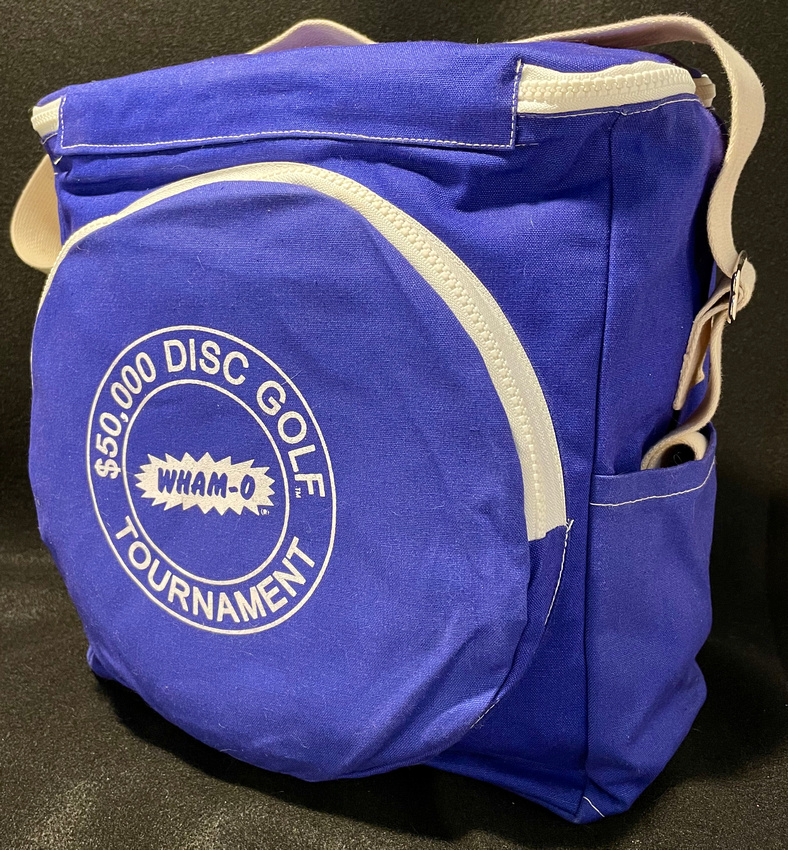
For starters, your bag would have been a small canvas bag with around a 7 disc capacity (depending on the thickness of the molds you threw). You would have more than likely worn a good old-fashioned cotton t-shirt that was not disc golf specific, all of that branding simply was not around at that time. You may have worn high socks and you certainly knew how to throw the hyzer flip. After all, every disc from the early days was lightweight and understable. Think of your typical ultimate frisbee disc. The beveled edge had yet to be invented.
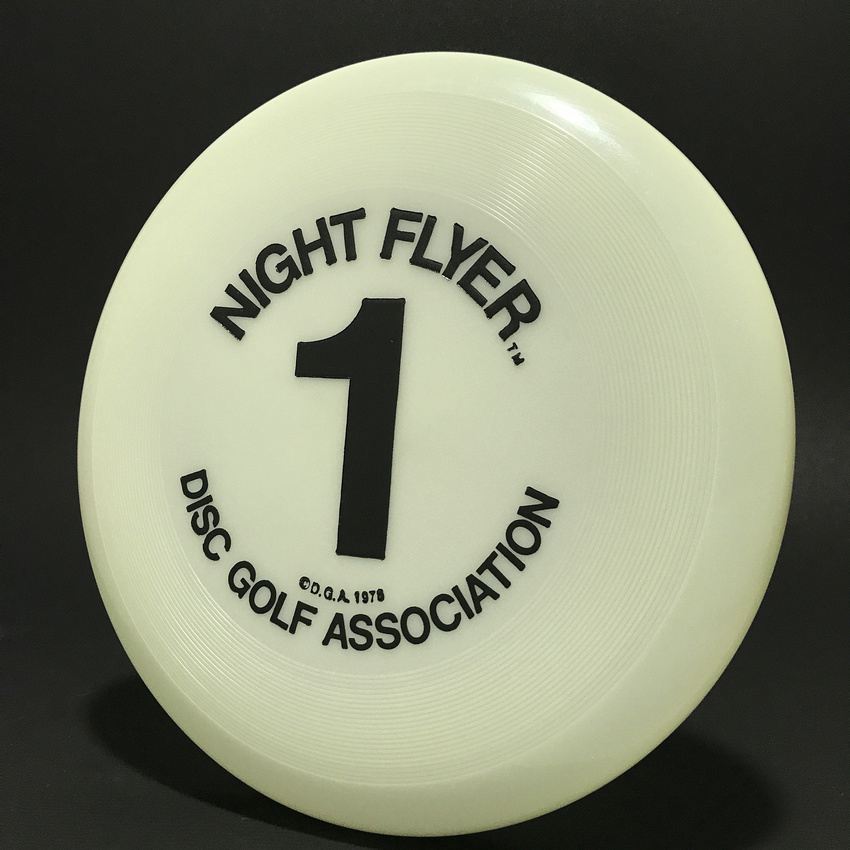
In the early days, there were very few discs to choose from and they all came from Wham-O. The first PDGA approved disc was called the Professional and came in 15 different molds. It was approved on January 1, 1964, and was the only PDGA approved disc for another three years. Over the next 14 years, Wham-O gained PDGA certification for many discs including the Master, Fastback, Super Pro, 165g, 141g, and 119g. Then, on January 1, 1978, Headrick’s company DGA gained PDGA approval for the Night Flyer. This was a game-changer. EVERYONE was throwing this disc.
According to the Flying Disc Museum,” It was a Wham-O 40 mold, but beefed up a bit with glow material to make it a heavier, better golf disc.” This glowing material added weight to the Night Flyer and allowed for a “more stable” flight. You could also throw it at night! “More stable” is relative as all discs of the 70s era were extremely understable by today’s standards. This meant that if you were a player in the 70s you had to be a master of the hyzer flip to get distance.
This single disc set the tone for other disc golf-specific companies to come to fruition and release discs beginning in the early 1980s. Companies were in a battle to create more stable discs to give players extra distance. Some of these companies included Discraft, Destiny/Dynamic Discs, Lightning, and Innova. The stage was set for disc golf to take off as the most popular disc-specific sport.
Playing Multiple Frisbee Sports
If you were a disc golfer in the 1970s, chances are that you played a variety of frisbee-related sports. There was a passion for the frisbee that flowed throughout all of the frisbee-centric sports. Players could be seen hanging around the disc golf course and jamming freestyle with friends. These disciplines intertwined and it wasn’t until many decades later that disc golf and ultimate frisbee emerged as cultural leaders for disc sports. This created a tight-knit community with a huge passion for the collective of frisbee sports.
On January 23, 1957, the Wham-O Toy Company rolled out their first batch of flying discs known to the world as Frisbees. An inscription on these Frisbee’s read as follows,” Play catch, invent games. To fly, flip away backhanded; flat flip flies straight; tilted flip curves-experiment!” Players used their creativity and over the next couple of decades invented scores of frisbee-centric games. These games included but were not limited to:
- Double Disc Court (DDC)
- GUTS
- Disc Golf
- Ultimate Frisbee
- Freestyle
- Canine Disc
- Distance
Prior to the PDGA’s invention, Headrick created the International Frisbee Association (IFA). The year was 1967 and he created this organization as a way to deal with consumer’s strong responses to products and to satisfy his own fascination with the frisbee. In 1975 Headrick hired Dan “Stork” Roddick and put him in charge of the IFA. Roddick was instrumental in establishing the National Series meets, he began the affiliate club program, started the publication Frisbee Disc World, initiated international ties, and developed and implemented the regional director program. The IFA was in good hands. With this move, Headrick was free to pursue other personal passions.
A New Organization: PDGA
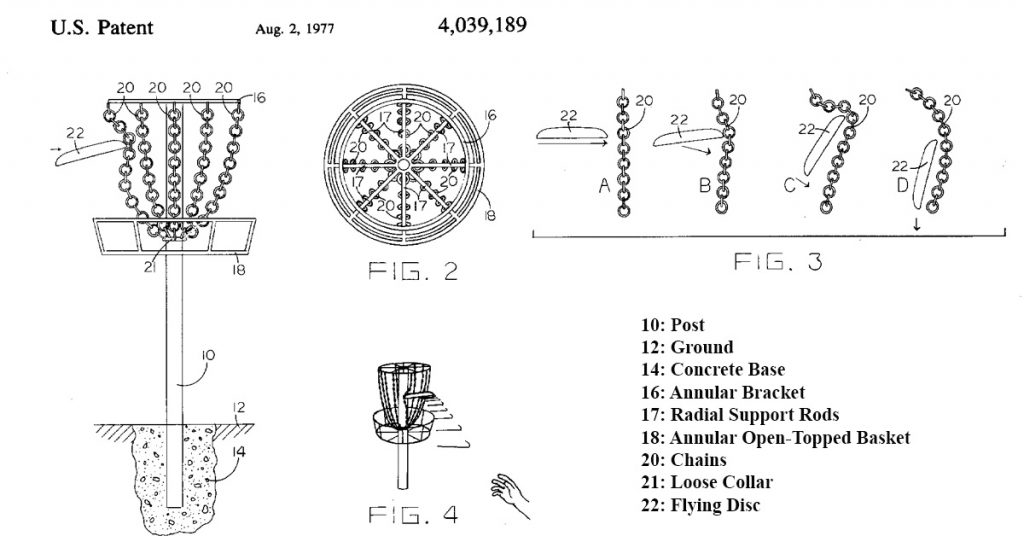
“Steady” Ed Headrick went on a creative spree during the 1970s that legitimized disc golf. In 1975 he invented the Disc Golf Pole Hole (the basis of all disc golf targets today). Headrick then installed the world’s first official disc golf course with pole holes at Oak Grove Park in Pasadena, CA. Shortly after, in 1976, Headrick quit his job at Wham-O and formed the Disc Golf Association (DGA). He was all in on disc golf. This was the sports first fully dedicated company and still operates to this day. Headrick next created the Professional Disc Golf Association (PDGA) in 1976. Not bad for a few years of work! All of this effort set the Frisbee world on fire.
Frisbee Fanatics Hit the Road
If you were to play disc golf in the 1970’s chances are you lived in a few pockets of the American and Canadian landscape. Places like Rochester, NY, Pasadena, CA, and Vancouver, BC became hotbeds for disc golf and all things frisbee. Disc golf courses were just beginning to be installed and the sport was not known to the general public. Also, imagine this, there was no internet to share the sport! Growing the sport meant in-person interactions via traveling exhibitions and tournaments. Many of these exhibitions were created through grassroots efforts by early adopters and pioneers of disc sports.
According to Disc Sports History:
“Organized disc sports began with promotional efforts from Wham-O (U.S.A.) and Irwin Toy (Canada), a few tournaments and professionals using Frisbee show tours to perform and promote disc sports at universities, fairs, and sporting events. The foundation for the beginning of all the disc sports were the early player pioneers and their multi-event tournaments of that period.”
-Disc Sports History
The world’s best players from multiple disc disciplines would come to town and if you were lucky enough you could catch a glimpse of the wonder of frisbee flight. This organically occurred all over the US, Canada, and parts of Europe throughout the 1970s. What follows is a list of some of the earliest competitions and tournament directors:
- Healy Family and the International Frisbee Tournament (IFT) in Eagle Harbor, Michigan
- Ken Westerfield and Jim Kenner’s Canadian Open Frisbee Championships (1972) in Toronto and their Vancouver Open Frisbee Championships (1974)
- Dan Roddick and Flash Kingsley’s Octad (1974) in New Brunswick, NJ Jim Palmeri’s American Flying Disc Open (AFDO, 1974) in Rochester, NY
- University of Michigan Indoor Frisbee Festival
- Ed Headrick’s World Frisbee Championships (WFC, 1974) Rose Bowl, Pasadena, CA.
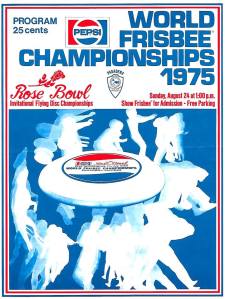
Here are a few highlight videos for some serious nostalgia and fun-loving frisbee content:
Bringing It All Together
Disc golf in the 1970s was a completely different scene than what we have today. You were likely from a certain pocket of the world that had a course (object or pole holes) and you played multiple disciplines of frisbee-specific sports. This created a tight-knit group of enthusiasts and a passion that runs through the sport to this day. All of us owe a debt of gratitude to the passion of these pioneers for setting the stage for what disc golf has grown into. And hey, maybe learn to throw a hyzer-flip as a nod to the originators of our sport. How far we have come!