
0
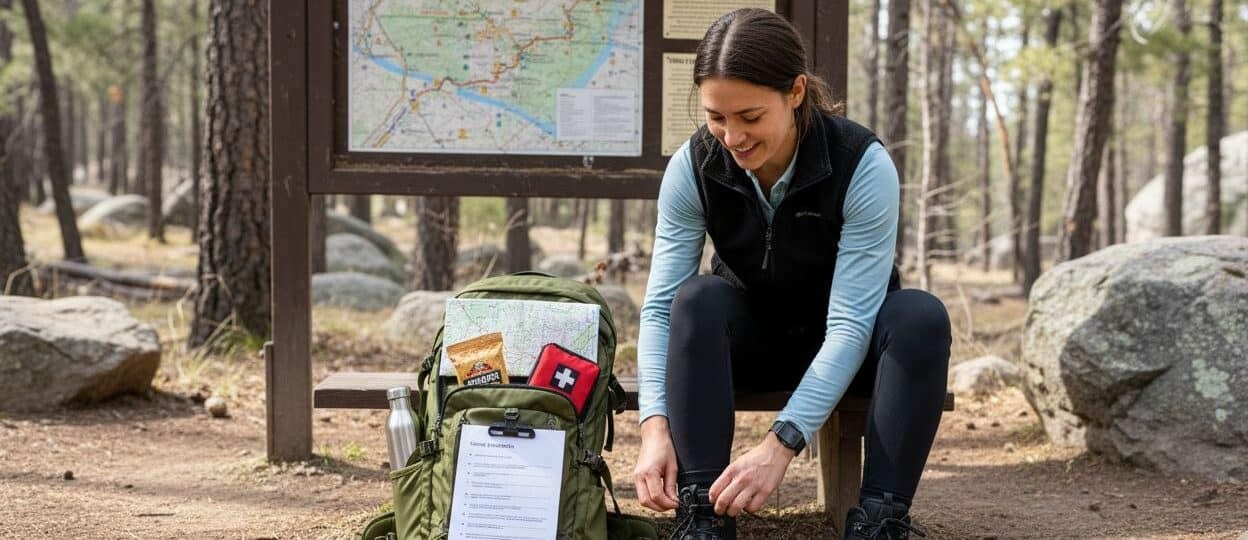
How to Start Hiking: A Step-by-Step Guide for Adventurers
Hiking looks easy enough until you realize it draws in more than 47 million Americans every year and leaves a surprising number unprepared for even the simplest trails. Most people obsess about fancy gear or epic mountain photos and completely miss what really matters before their first step. The truth is the difference between a rewarding trek and a miserable struggle starts long before your boots hit the dirt.
Table of Contents
- Step 1: Assess Your Fitness Level And Goals
- Step 2: Choose The Right Hiking Gear
- Step 3: Research Local Trails And Conditions
- Step 4: Plan Your Hiking Itinerary
- Step 5: Practice Safety And Navigation Skills
Quick Summary
| Key Point | Explanation |
|---|---|
| 1. Assess Your Fitness Level First | Know your fitness capabilities to avoid injury and select appropriate trails. |
| 2. Invest in Quality Hiking Gear | Proper footwear and layered clothing ensure comfort and safety on the trail. |
| 3. Research Trails Before Hiking | Understanding trail conditions and requirements prevents unexpected challenges. |
| 4. Create a Detailed Hiking Itinerary | A clear plan, including timing and emergency contacts, enhances safety and preparedness. |
| 5. Practice Safety and Navigation Skills | Master navigation and first aid to handle emergency situations confidently. |
Step 1: Assess Your Fitness Level and Goals
Before embarking on your hiking adventure, understanding your current physical condition and personal objectives is crucial for a safe and enjoyable experience. Hiking demands varied physical capabilities, and matching your fitness level to appropriate trail challenges will help prevent injury and ensure a positive outdoor experience.
Begin by conducting an honest self-assessment of your current physical fitness. This isn’t about competing or comparing yourself to others, but understanding your personal baseline. Consider your typical weekly physical activity, existing cardiovascular endurance, and strength levels. If you primarily work a sedentary job or haven’t engaged in regular exercise, starting with shorter, easier trails will be more appropriate than attempting challenging mountain routes.
According to the Centers for Disease Control and Prevention, adults should aim for at least 150 minutes of moderate aerobic activity or 75 minutes of vigorous activity weekly. For hiking preparation, focus on activities that build cardiovascular endurance and lower body strength:
- Walking or hiking on local trails
- Stair climbing
- Cycling
- Swimming
- Bodyweight strength training targeting legs and core
Defining clear, realistic goals will transform your hiking journey from overwhelming to achievable. Ask yourself fundamental questions: Are you seeking weekend relaxation, physical challenge, nature photography, or wilderness exploration? Your objectives will significantly influence trail selection, required equipment, and training approach.
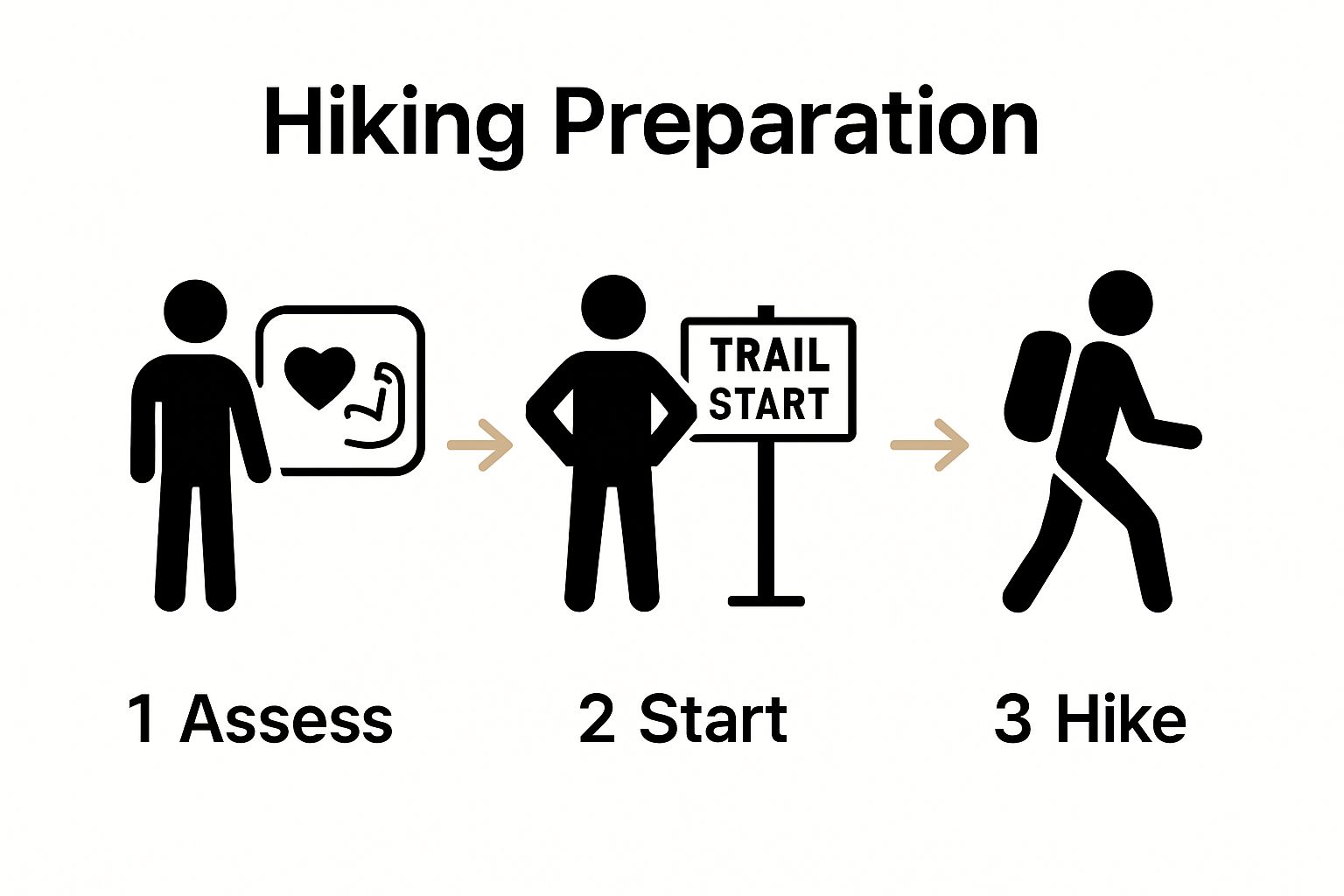
Create a progressive training plan that gradually increases your hiking difficulty. Start with well-maintained local trails of 2-3 miles with minimal elevation gain. As your fitness improves, incrementally challenge yourself with longer distances, moderate elevation changes, and more diverse terrain. Listen to your body, track your progress, and adjust your goals accordingly.
Verify your readiness by monitoring key indicators: Can you comfortably walk 3-5 miles without excessive fatigue? Do you feel confident navigating uneven surfaces? Are you comfortable carrying a small backpack with essential supplies? Positive responses suggest you’re prepared to advance to slightly more challenging trails.
Remember, hiking is a personal journey. Your path will look different from others, and that’s perfectly acceptable. Patience, consistent preparation, and a positive mindset are your greatest assets in becoming a confident, capable hiker.
Step 2: Choose the Right Hiking Gear
Equipping yourself with appropriate hiking gear transforms an ordinary walk into a safe, comfortable outdoor adventure. Proper gear is more than just equipment – it’s your lifeline on the trail, protecting you from environmental challenges and unexpected conditions.
Your foundational hiking ensemble starts with footwear. Invest in high-quality hiking boots or trail shoes that match your anticipated terrain. For well-maintained local trails, lightweight trail runners might suffice, while rocky mountain paths demand robust, ankle-supporting boots with sturdy tread. Try multiple pairs, ensuring a comfortable fit with minimal heel movement and ample toe room to prevent blisters and support natural foot mechanics.
According to REI Co-op, clothing selection requires strategic layering. Start with a moisture-wicking base layer that pulls sweat away from your skin, preventing chills and discomfort. Mid-layers like fleece or lightweight wool provide insulation, while an outer shell protects against wind and potential rain. Avoid cotton, which retains moisture and can lead to rapid heat loss.
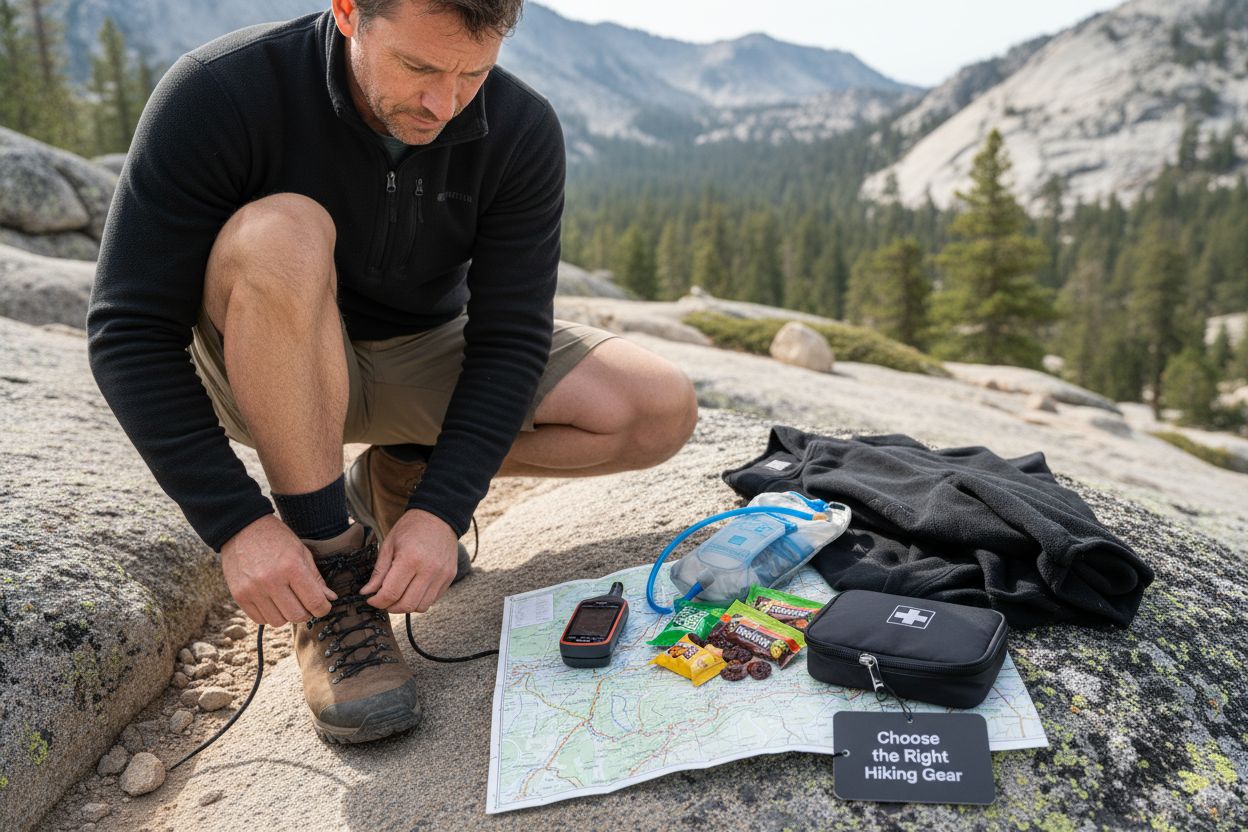
Essential hiking gear extends beyond clothing. Your backpack should be lightweight yet spacious enough to carry critical supplies:
- Water and hydration system
- Trail snacks and emergency food
- First aid kit
- Navigation tools (map, compass, or GPS device)
- Emergency shelter (lightweight emergency blanket)
- Sun protection
- Multi-tool or knife
Technology can enhance your hiking experience, but shouldn’t replace fundamental survival skills. Consider a reliable smartphone with offline maps, portable battery pack, and emergency communication capabilities. However, always carry traditional navigation tools as backup, recognizing that electronic devices can fail in remote environments.
For new hikers, renting or borrowing gear initially allows exploration without significant financial investment. Many outdoor retailers offer rental programs and expert advice to help you select appropriate equipment. As you gain experience, you’ll develop a more nuanced understanding of your personal gear requirements.
Verify your gear’s readiness by conducting a pre-hike equipment check. Ensure all items are functional, easily accessible, and properly fitted. Test new boots around your neighborhood, familiarize yourself with backpack compartments, and confirm all electronics are fully charged. A comprehensive gear preparation transforms potential anxiety into confident anticipation of your outdoor journey.
Here is a quick-reference table summarizing essential hiking gear for beginners, including gear type, purpose, and key considerations for each item.
| Gear Item | Purpose | Key Considerations |
|---|---|---|
| Hiking Boots/Shoes | Protect feet on uneven terrain | Proper fit, terrain suitability |
| Base Layer Clothing | Manage moisture, prevent chills | Moisture-wicking material, avoid cotton |
| Mid-Layer | Provide insulation | Fleece or lightweight wool |
| Outer Shell | Shield from wind and rain | Waterproof, breathable |
| Lightweight Backpack | Carry supplies and essentials | Comfortable fit, adequate space |
| Water/Hydration System | Stay hydrated on the trail | Sufficient capacity, easy access |
| First Aid Kit | Address minor injuries | Compact, customized for needs |
| Navigation Tools | Guide and track your route | Map, compass, GPS, offline maps |
| Sun Protection | Prevent sunburn and eye damage | Sunscreen, hat, sunglasses |
Step 3: Research Local Trails and Conditions
Trail research is the critical bridge between hiking ambition and actual adventure, transforming your outdoor experience from uncertain to confident. Comprehensive trail investigation prevents unexpected challenges and ensures you select routes matching your fitness level, skill, and personal interests.
Begin your trail research by exploring local resources. State and national park websites, hiking community forums, and outdoor recreation apps provide detailed trail information. Look for specifics like total distance, elevation gain, terrain difficulty, and seasonal accessibility. Many online platforms offer user-generated reviews and recent trail condition updates, giving you real-world insights beyond official descriptions.
According to the U.S. Forest Service, understanding local conditions goes far beyond simple route mapping. Weather patterns, potential hazards, and seasonal restrictions can dramatically impact your hiking experience. Check recent trail reports for information about:
- Recent maintenance status
- Potential trail closures
- Wildlife activity
- Recent natural events (landslides, flooding)
- Required permits or entry fees
Geographic diversity demands flexible preparation. Mountain trails might have snow well into summer, while desert paths can become dangerously hot during midday. Local ranger stations and visitor centers offer invaluable current information that online resources might miss. Call ahead or visit in person to get the most up-to-date trail conditions and receive personalized advice from experienced professionals.
Digital mapping tools like AllTrails, Hiking Project, and topographic apps can provide detailed trail visualization. These platforms often include elevation profiles, user photos, and GPS tracking features. Download offline maps for areas with limited cellular coverage, ensuring you can navigate even without internet access.
Consider joining local hiking groups or attending outdoor recreation workshops to gain insider knowledge. Experienced hikers can offer nuanced insights about trail characteristics, recommended seasons, and potential challenges that aren’t apparent in standard trail descriptions. Many communities have Facebook groups or meetup organizations dedicated to sharing hiking information and organizing group expeditions.
Verify your trail research by creating a comprehensive hiking plan. Your completed research should answer key questions: Can you realistically complete this trail given your current fitness level? Do you have appropriate gear for the specific terrain and potential weather conditions? Have you identified potential emergency resources or alternate routes? A thorough, well-researched plan transforms potential uncertainty into confident exploration.
Step 4: Plan Your Hiking Itinerary
Creating a comprehensive hiking itinerary transforms your outdoor adventure from a vague idea into a structured, safe expedition. An effective itinerary is your blueprint for success, balancing excitement with practical preparation and risk management.
Start by establishing realistic timeframes that account for your fitness level and trail complexity. New hikers often underestimate hiking duration, forgetting that challenging terrain, elevation changes, and rest breaks significantly impact overall travel time. As a general rule, calculate your expected pace at approximately 2 miles per hour on moderate terrain, reducing this estimate for more difficult trails with significant elevation or technical sections.
Make detailed communication your priority. Share your complete itinerary with a trusted friend or family member who is not joining the hike. Provide them with specific, written documentation including:
- Exact trail name and location
- Expected start and end times
- Planned route with key waypoints
- Emergency contact information
- Estimated return time
- Vehicle description and parking location
Physical and digital navigation tools are crucial for precise route planning. Combine traditional topographic maps with GPS tracking apps, understanding that technology can fail. Print physical map copies as backup, marking potential rest stops, water sources, and emergency exit routes. Familiarize yourself with the trail map before departure, visualizing the entire route and potential challenges.
Consider time of day and seasonal variations when scheduling your hike. Early morning starts provide cooler temperatures and better wildlife viewing opportunities, while afternoon hikes risk unexpected weather changes. Check sunrise and sunset times, ensuring you have ample daylight for your planned route. Always plan to complete your hike with at least two hours of cushion before sunset, allowing for unexpected delays or rest periods.
Packing an emergency overnight kit, even for day hikes, provides crucial safety margins. Include lightweight emergency shelter, extra food, water purification methods, and basic first aid supplies. Your preparedness can transform a potential crisis into a manageable situation should unexpected circumstances arise.
Verify your itinerary’s completeness by conducting a final checklist review. Confirm that someone knows your exact plans, you have multiple navigation tools, emergency supplies are packed, and your physical condition matches the trail’s demands. A well-planned itinerary isn’t about restricting adventure – it’s about creating a framework that allows you to explore confidently and safely.
Step 5: Practice Safety and Navigation Skills
Safety and navigation skills are the foundation of confident hiking, transforming potential wilderness challenges into manageable experiences. Mastering these fundamental skills turns uncertainty into controlled exploration, protecting you from potential risks and enhancing your outdoor enjoyment.
Begin by developing robust map and compass navigation skills before hitting challenging trails. Practice reading topographic maps in controlled environments like local parks or familiar areas. Learn to identify key map features: contour lines, elevation markers, water sources, and trail markers.
Understanding how to orient a map and correlate physical landmarks with your paper or digital representation is crucial for wilderness navigation.
According to the National Park Service, emergency preparedness extends far beyond navigation tools. Develop a comprehensive safety mindset that anticipates and mitigates potential risks. Invest time in learning basic wilderness first aid, understanding how to respond to potential scenarios like minor injuries, unexpected weather changes, or wildlife encounters.
Essential safety skills every hiker should practice include:
- Basic wound cleaning and bandaging
- Recognizing early signs of hypothermia
- Creating emergency shelter
- Signaling for help
- Managing unexpected wildlife interactions
Technology offers valuable navigation support, but should never replace traditional skills. Download offline mapping applications that function without cellular service, but always carry physical map and compass as backup. Learn to use GPS devices effectively, understanding their limitations in remote areas with potential signal interference.
Wilderness communication requires strategic preparation. Carry multiple communication devices, recognizing that cell phones may not work in remote locations. Personal locator beacons or satellite communication devices provide critical emergency contact capabilities when traditional methods fail. Learn how to use these devices before your expedition, understanding their specific operational requirements.
Wildlife and environmental awareness represent another crucial safety dimension. Research local wildlife behaviors, understand appropriate response protocols for potential encounters, and learn to recognize signs of dangerous animal presence. Familiarize yourself with local terrain-specific risks like sudden weather changes, potential flash flood areas, or regions with challenging terrain.
Verify your safety preparedness by conducting comprehensive practice scenarios. Simulate navigation challenges in controlled environments, practice emergency first aid techniques, and ensure you can confidently use all safety equipment. A well-prepared hiker transforms potential wilderness challenges into exciting, manageable adventures.
Use this table as a checklist to verify essential safety and navigation skills before heading out on your hike, ensuring that you are prepared for a variety of trail situations.
| Safety Skill | Description | How to Verify Preparedness |
|---|---|---|
| Map and Compass Navigation | Read topographic maps and use compass | Successfully navigate a marked route |
| Basic First Aid | Treat minor injuries and emergencies | Demonstrate treating a wound |
| Emergency Shelter Creation | Build or deploy emergency shelter | Assemble shelter with available gear |
| Wildlife Awareness | Recognize and respond to animal encounters | Know species-specific protocols |
| Signaling for Help | Attract attention in an emergency | Show proper use of signal device |
| GPS/Offline Map Use | Operate digital navigation tools | Plot and follow a saved route offline |
| Recognize Hypothermia Signs | Identify and react to cold exposure | List symptoms and response actions |
Transform Your Outdoor Adventures With Disc Golf
Are you eager to build your confidence on the trail while searching for fun, active ways to boost your strength, navigation, and outdoor skills? Many new hikers want to improve their fitness, find the right gear, and enjoy time in nature. But building stamina and preparing for real adventures can feel overwhelming. Incorporating disc golf challenges can be your next step. This outdoor sport blends physical activity with strategic navigation and community, keeping your hikes fun while you train. Check out Golf Discs for beginner-friendly disc golf gear and learn how to stay engaged as you work through your hiking goals.

Level up your wilderness experience right now. Visit Golf Discs to explore top-quality disc golf discs and equipment. Enhance your adventures with gear that lets you practice outdoors, strengthen your core, and make every trek more rewarding. Ready to make the most of your time in nature? Start shopping at Golf Discs and take your first step towards new outdoor challenges.
Frequently Asked Questions
How do I assess my fitness level before starting to hike?
Begin by evaluating your typical weekly physical activity, cardiovascular endurance, and strength. Consider your comfort level with walking distances and uneven terrain to match your fitness with appropriate hiking trails.
What kind of hiking gear do I need for beginners?
Essential beginner gear includes high-quality hiking boots or shoes, moisture-wicking clothing, a lightweight backpack, water, trail snacks, and basic safety equipment like a first aid kit and navigation tools.
How can I safely plan my hiking itinerary?
When planning your itinerary, calculate your expected hiking pace, communicate your plan to someone, and ensure you have multiple navigation tools. Consider the time of day and possible weather changes, and pack emergency supplies.
What safety skills should I practice before hitting the trail?
Important safety skills include map and compass navigation, basic first aid, and understanding how to respond to wildlife encounters. Practice using your navigation tools and simulate emergency scenarios to build confidence.