0

Disc Golf Guide for Beginners: Complete Essentials
More than three million people now play disc golf in the United States each year, making it one of the fastest-growing outdoor sports. Whether you are looking for an accessible hobby or an exciting way to enjoy the outdoors, disc golf offers a unique blend of strategy, skill, and fun. With simple rules, specialized equipment, and courses in public parks, this sport welcomes all ages and skill levels while challenging players to sharpen their technique.
Table of Contents
- Disc Golf Explained: Core Rules And Concepts
- Understanding Disc Types And Their Uses
- Essential Equipment And Gear For Beginners
- How Disc Golf Scoring And Play Works
- Common Beginner Mistakes And Safety Tips
Key Takeaways
| Point | Details |
|---|---|
| Objective of Disc Golf | The goal is to complete each hole in the fewest number of throws, similar to traditional golf, utilizing specialized flying discs. |
| Disc Types and Usage | Players should choose from three main disc types—drivers, midrange discs, and putters—each designed for specific throwing scenarios and distances. |
| Essential Equipment for Beginners | New players need a starter disc set, a lightweight bag, and appropriate attire to enjoy the sport without significant upfront costs. |
| Common Beginner Mistakes | Avoid improper throwing techniques, lack of awareness of surroundings, and using discs beyond skill level to ensure a safer and more enjoyable experience. |
Disc Golf Explained: Core Rules and Concepts
Disc golf is a precision sport where players throw specialized flying discs into elevated metal basket targets across a course, following similar principles to traditional golf. Just like golf, the objective is to complete each “hole” in the fewest number of throws possible. Players navigate through various terrains including open fields, wooded areas, and sometimes challenging landscape obstacles.
The fundamental rules center around scoring and throw techniques. Each throw counts as a stroke, with players aiming to reach the basket in the minimum number of throws. When a disc lands in the target basket, that hole is complete. Players typically start from a designated tee area and must throw their next shot from where the previous disc landed. Understanding Disc Golf Rules: A Simple Guide for Players provides excellent insights into these core mechanics.
Disc golf equipment varies based on throwing technique and distance. Players typically carry multiple discs including:
- Drivers: Designed for maximum distance
- Midrange discs: Balanced for accuracy and moderate distance
- Putters: Used for short, precise shots near the basket
Unlike traditional golf, disc golf courses are often free to play in public parks, making it an accessible and affordable recreational sport for players of all skill levels. Understanding Disc Golf for Beginners: A Complete Guide offers comprehensive insights for newcomers looking to start their disc golf journey.
Understanding Disc Types and Their Uses
Disc golf requires specialized equipment, with different disc types designed to perform unique functions across various throwing scenarios. Players typically carry multiple disc types to handle different distances and course challenges. Understanding Disc Golf Types: A Comprehensive Guide highlights the critical importance of selecting the right disc for each throw.
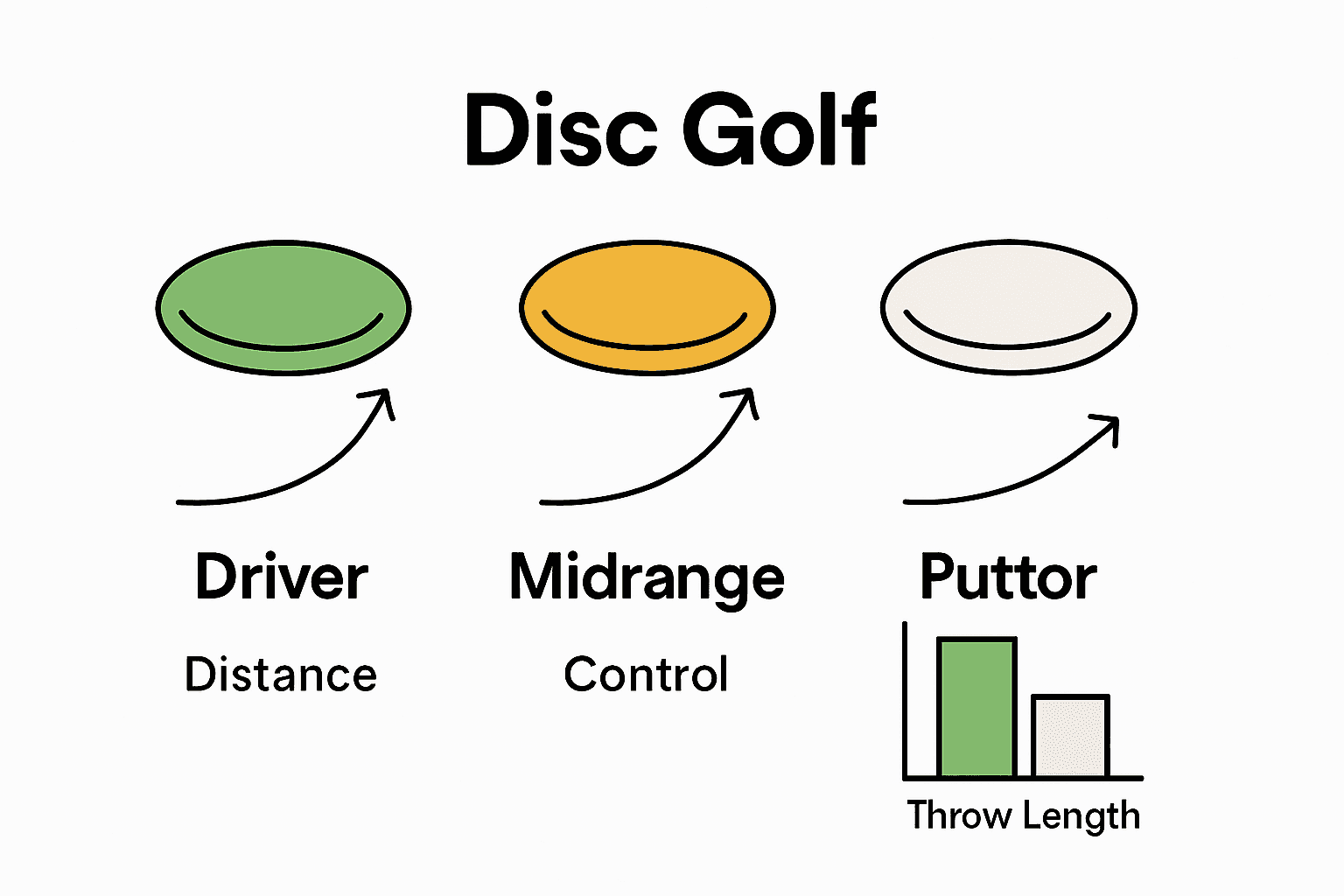
The three primary disc categories include:
Here’s a quick comparison of the three main disc golf disc types:
| Disc Type | Primary Use | Key Characteristics |
|---|---|---|
| Driver | Long-distance throws | Max distance Sharper rim Less stable for beginners |
| Midrange Disc | Accurate medium-distance | Balanced flight Greater control Smooth edges |
| Putter | Short, precise shots | Blunt edge Slower speed Stable, predictable flight |
- Drivers: Long-distance discs designed for maximum throw range
- Midrange Discs: Balanced discs providing accuracy and moderate distance
- Putters: Specialized discs for short, precise shots near the basket
Each disc type has unique characteristics related to stability, weight, and plastic composition.
Stability determines how the disc will fly based on its design – whether it tends to curve left, right, or maintain a straight trajectory. Understanding Disc Golf Disc Stability: A Complete Guide provides deeper insights into how disc design impacts flight patterns.
Plastic types also significantly influence disc performance. Different plastic materials offer varying levels of grip, durability, and flight characteristics. Beginners often start with more affordable, durable plastics that provide consistent performance, while advanced players might choose specialized plastics that offer nuanced flight dynamics. Understanding these subtle differences can dramatically improve a player’s game and disc selection strategy.
Essential Equipment and Gear for Beginners
Starting disc golf requires minimal initial investment, making it an accessible sport for newcomers. The fundamental equipment every beginner needs includes a set of versatile discs, a comfortable carrying bag, and appropriate attire for outdoor play. While professional players might invest in extensive gear, beginners can start with just a few essential items.
Your initial disc golf kit should include:
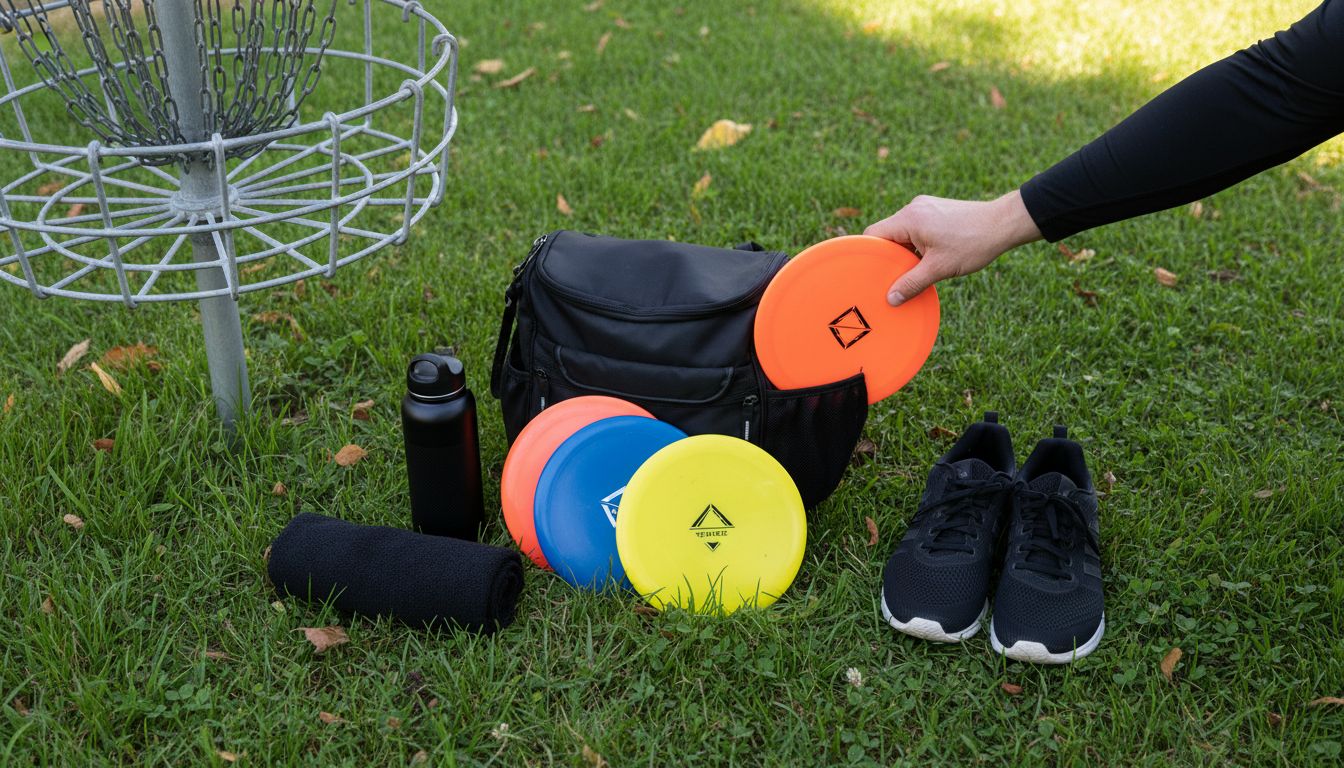
- Starter Disc Set: 3-4 discs covering different throwing types
- Disc Golf Bag: Lightweight bag to carry discs and personal items
- Comfortable Athletic Shoes: Providing good traction and support
- Water Bottle: Staying hydrated during play
- Towel: For cleaning discs and managing moisture
The most crucial investment for beginners is a quality starter disc set. This typically includes a driver, midrange disc, and putter. Many experienced players recommend purchasing beginner-friendly discs with stable flight characteristics that provide consistent performance. How to Start Hiking: A Step-by-Step Guide for Adventurers offers similar guidance about preparing for outdoor activities that can help disc golf newcomers approach their equipment selection strategically.
Budget considerations are important for beginners. While professional-grade equipment can be expensive, most local disc golf shops and online retailers offer affordable starter sets. Expect to spend around $30-$50 for initial discs, with additional accessories like bags and other gear available at various price points. As your skills improve, you can gradually upgrade your equipment to match your developing playing style.
How Disc Golf Scoring and Play Works
Disc golf scoring closely mirrors traditional golf, with players tracking the number of throws needed to complete each hole. The goal is to navigate the course using the fewest possible throws, with each throw counted as a stroke. Unlike traditional golf, disc golf courses typically feature natural terrain including open fields, wooded areas, and varied landscape challenges that add complexity to each shot. How is frisbee golf scored? provides detailed insights into the scoring mechanics.
A typical disc golf round follows these fundamental gameplay principles:
- Players start at a designated tee area for each hole
- The objective is to land the disc in the elevated metal basket with the least number of throws
- Each throw from where the previous disc landed counts as a stroke
- The player with the lowest total strokes at the end of the course wins
Scoring terminology in disc golf includes several key concepts. A par represents the expected number of throws to complete a hole, similar to traditional golf. Players can score under par (fewer throws than expected), par (exact expected throws), or over par (more throws than expected). Disc Golf Terms: Everything You Need to Know offers a comprehensive breakdown of these scoring nuances.
Competitive disc golf tournaments typically use stroke play format, where the total number of throws across all holes determines the winner. Casual players often focus on personal improvement and enjoying the outdoor experience, tracking their progress across multiple rounds. The sport’s accessibility allows players of all skill levels to participate, with courses designed to challenge both beginners and experienced disc golfers.
Common Beginner Mistakes and Safety Tips
Learning disc golf involves understanding both technical skills and critical safety considerations. Beginners often make common mistakes that can impact their performance and potentially create hazardous situations on the course. Awareness and proactive preparation are key to enjoying the sport safely and effectively.
Common mistakes new disc golfers should avoid include:
- Improper Throwing Technique: Incorrect grip and release leading to unpredictable disc flights
- Lack of Awareness: Not checking surroundings before throwing
- Inappropriate Disc Selection: Using advanced discs beyond skill level
- Inadequate Warm-up: Skipping stretching and practice throws
- Ignoring Course Etiquette: Failing to respect other players and course rules
Safety is paramount in disc golf. Players must always be mindful of their surroundings, checking for other players, pedestrians, and potential hazards before throwing. 7 Essential Tips for Gardening for Beginners offers similar principles of situational awareness that apply to outdoor sports like disc golf.
Additional safety recommendations include wearing appropriate athletic shoes with good traction, staying hydrated, protecting yourself from sun exposure, and carrying a basic first aid kit. Beginners should start on less challenging courses, practice controlled throws, and gradually build their skills. Communication with other players about your intended throws and maintaining a safe distance are crucial to preventing accidents and ensuring an enjoyable experience for everyone on the course.
Take Your Disc Golf Game from Beginner to Pro with the Right Gear
Starting disc golf can feel challenging when you are still learning the rules, understanding different disc types, and mastering your throwing technique. You want to avoid common beginner mistakes like improper disc selection or inconsistent flight patterns. The good news is that having the right equipment designed for beginners can turn frustration into fun and steady progress.

Explore a wide range of beginner-friendly discs and essential gear at GolfDiscs.com. We offer expert advice on choosing the perfect driver, midrange disc, and putter to fit your style. Don’t wait to experience better control, improved throws, and confidence on the course. Start your disc golf journey today by visiting Understanding Disc Golf for Beginners: A Complete Guide and shop the ideal starter set at GolfDiscs.com. Your best game is just a click away!
Frequently Asked Questions
What are the different types of discs used in disc golf?
The three main types of discs used in disc golf are drivers, midrange discs, and putters. Drivers are designed for long-distance throws, midrange discs offer accuracy for medium distances, and putters are used for short, precise shots near the basket.
How does scoring in disc golf work?
Scoring in disc golf is similar to traditional golf. Players track the number of throws (strokes) it takes them to complete each hole. The objective is to complete the course using the fewest strokes possible, with terms like par, under par, and over par being used to describe performance relative to expectations.
What essential equipment do I need to start playing disc golf?
To start playing disc golf, you need a starter disc set (usually including a driver, midrange disc, and putter), a disc golf bag, comfortable athletic shoes, a water bottle, and a towel. This basic equipment will help beginners enjoy the game without a significant initial investment.
What are some common mistakes beginners make in disc golf?
Common mistakes among beginners include improper throwing technique, lack of awareness of surroundings while throwing, choosing inappropriate discs for their skill level, skipping warm-ups, and ignoring course etiquette. Being mindful of these aspects will enhance the overall playing experience.